
Off-Grid Power Explained: 16 Essential Concepts for Remote Energy Systems
Understanding the essential terminology behind reliable power for remote and distributed infrastructure
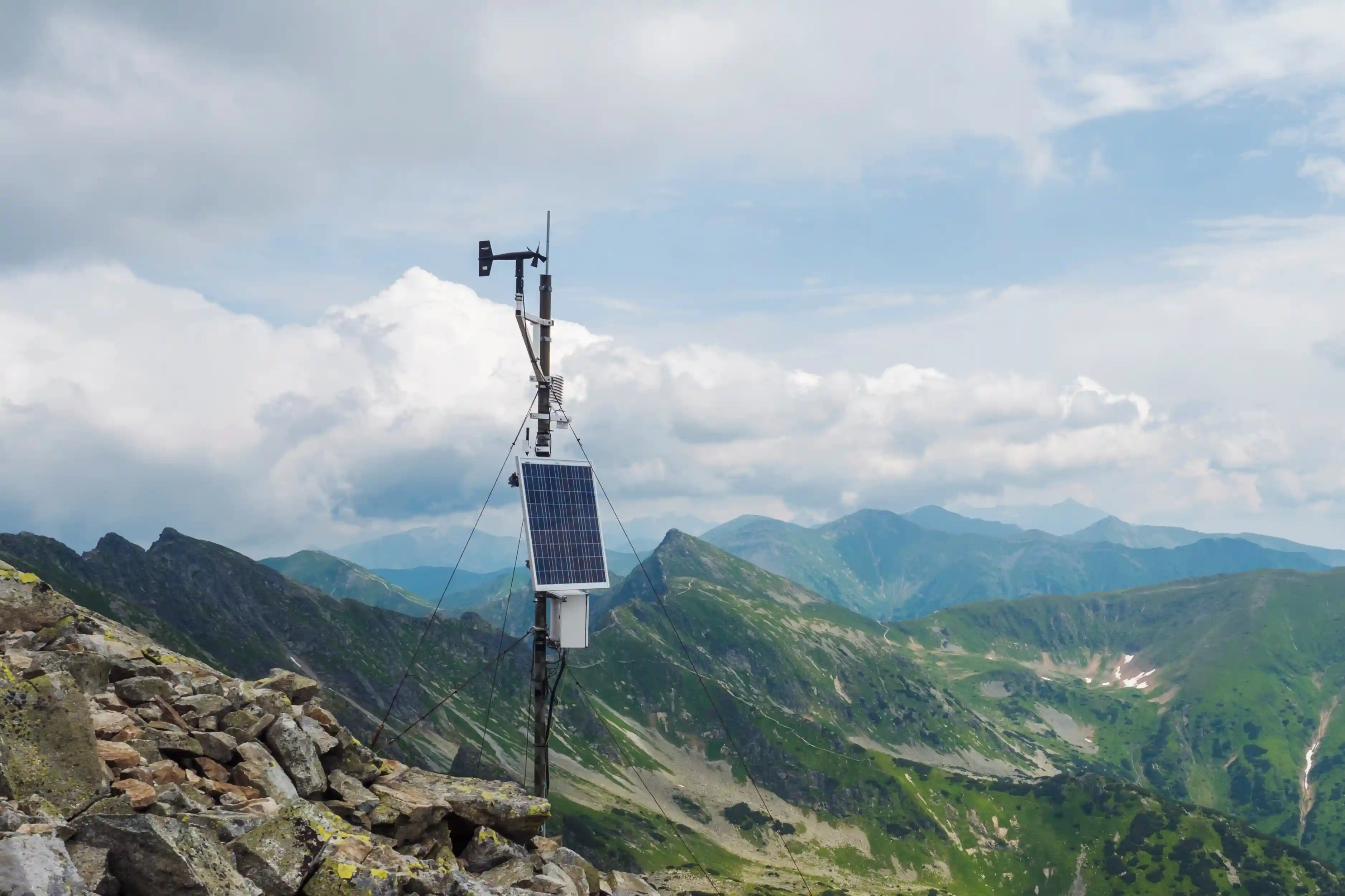
1. Off-grid power
Off-grid power refers to the generation and supply of electricity independently from the main electrical grid. It is used where grid access is unavailable, unreliable, impractical, too expensive or too slow to establish.
An off-grid power system may include solar panels, batteries, fuel cells, combustion generators, wind power or a combination of technologies. The appropriate configuration depends on the electrical load, operating environment, required availability, available fuel or renewable energy sources, and the period for which the system must operate.
Off-grid systems range from large installations serving communities, mines or telecom infrastructure to compact systems powering individual field assets. These smaller applications include surveillance equipment, temporary traffic systems, environmental monitoring stations, industrial sensors, oil and gas SCADA systems, and remote communications equipment.

INERGIO Mini provides continuous off-grid and backup power using standard commercial propane and solid oxide fuel cell technology. It can operate as a standalone power source or as part of a hybrid solar-battery system where additional energy is required to maintain year-round operation.
Learn more about fuel cells for off-grid power: Rethinking Fuel Cells for Off-Grid Power.
2. Distributed off-grid infrastructure
Distributed off-grid infrastructure consists of individual or networked assets deployed across remote, mobile, temporary or hard-to-access locations without dependable access to the electrical grid. Each asset requires its own power source or local energy system to remain operational.
Examples include mobile surveillance trailers, temporary traffic lights, variable message signs, weather stations, environmental sensors, telecommunications equipment, oil and gas SCADA systems, and other remote industrial assets. These systems may have moderate electricity requirements, but they support important functions such as safety, security, data collection, communication, automation and control.
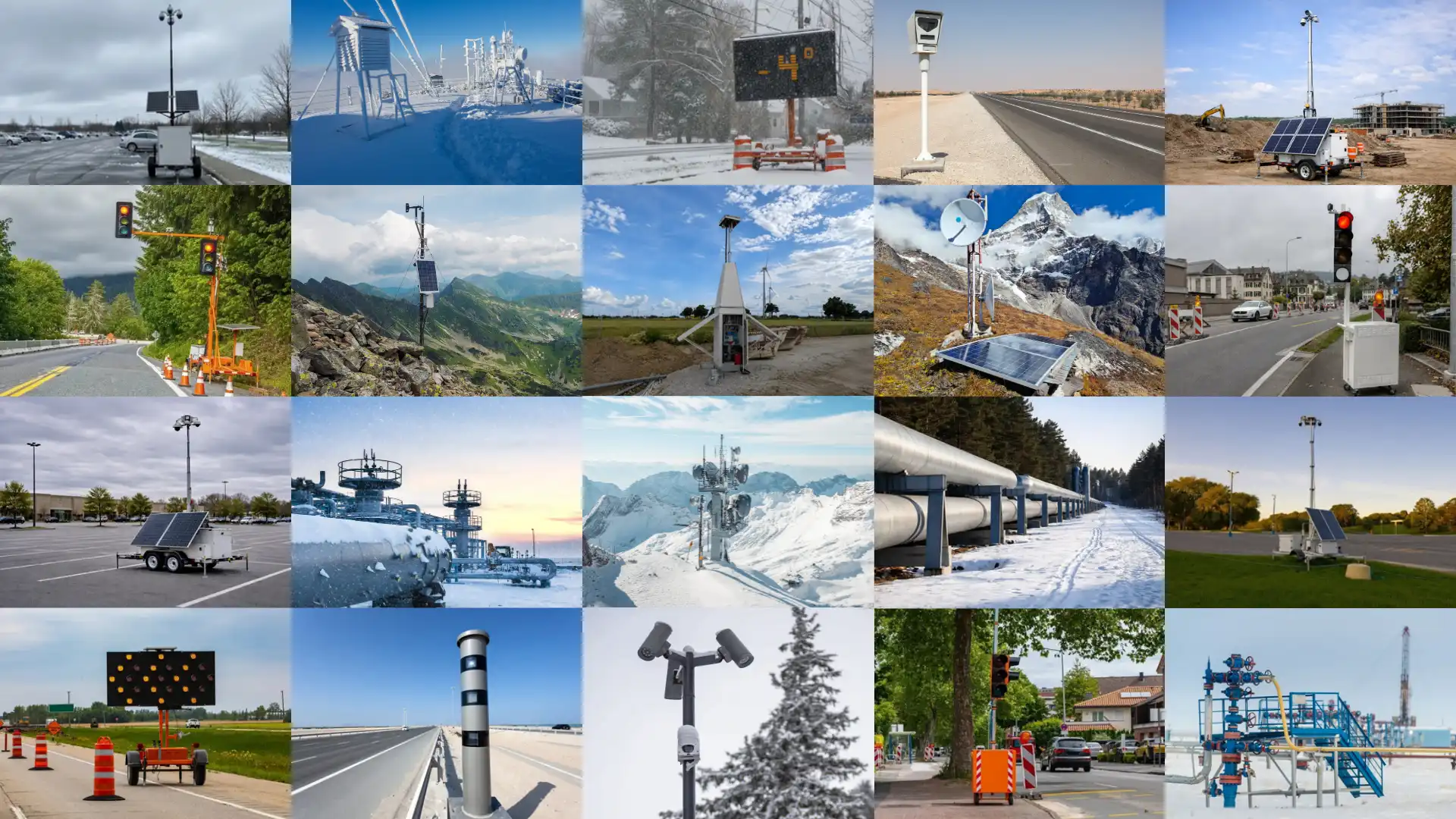
Because these assets operate across separate locations, maintenance, battery replacement, refuelling and technical interventions must be performed at each site. Reliability and the frequency of site visits therefore become increasingly important as the number of deployed assets grows.
INERGIO Mini is designed for distributed infrastructure that requires continuous power with limited on-site intervention. Typical applications include surveillance, traffic management, environmental monitoring, telecommunications and remote industrial equipment.
Explore the wider remote infrastructure landscape: How Big Is the Off-Grid Power Market? A 2026 Data-Backed Breakdown
3. Load profile
A load profile describes how much electrical power an application requires and how that demand changes over time. It includes the base load that remains active during normal operation, recurring operating cycles, short power peaks and longer variations linked to weather, season or operating mode.
For a surveillance trailer, the base load may include cameras, communications equipment, recording and processing hardware. Demand can temporarily increase when a PTZ camera moves, infrared lighting activates or data is transmitted. Systems using onboard AI analytics may have a higher sustained load because the processing equipment operates continuously. Similar variations occur in traffic, environmental monitoring and industrial applications when lights, sensors, heaters, pumps or communication devices switch on and off.

Understanding the complete load profile is essential when sizing an off-grid power system. Average power demand determines the total energy required over a day or year, while the magnitude and duration of power peaks influence battery capacity and power-system design. A short peak above the power source’s continuous output may be supplied by the battery. When higher demand continues for longer, it becomes part of the sustained load and must be included when sizing the energy source.
In a hybrid off-grid power system using INERGIO Mini, the battery responds immediately to changes in demand and supplies short power peaks. INERGIO Mini provides sustained energy over longer operating periods and restores charge to the battery. This allows the battery to manage rapid fluctuations while the SOFC supports the system’s longer-term energy requirements.
Explore how load, solar production and battery capacity interact: Solar and Off-Grid Power: Why Hybrid Systems Need More Than Batteries
4. Energy autonomy
Energy autonomy describes the period during which an off-grid power system can continue meeting the electrical demand of an application using its available energy sources and storage.
It depends on the relationship between the load profile and the energy available from the battery, solar panels, fuel supply and any other generation source. Relevant factors include battery capacity, solar production, fuel consumption, electrical efficiency, seasonal conditions and the lower battery operating limit.
Battery autonomy refers specifically to how long the battery can support the load before reaching its lower operating limit. Total system autonomy also includes the energy supplied by solar panels, fuel cells or other sources and may therefore extend far beyond the battery runtime alone.
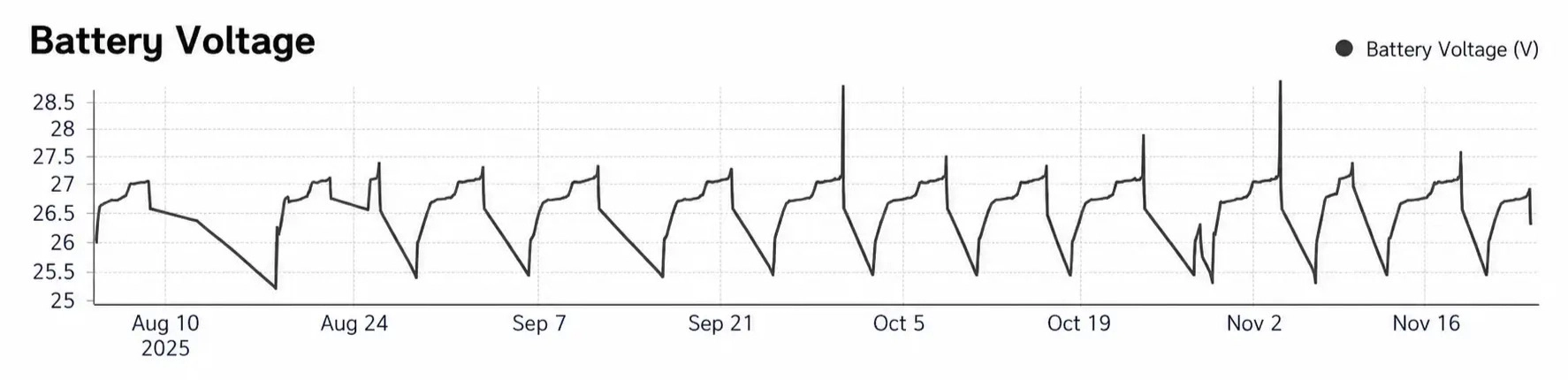
When INERGIO Mini is integrated into a hybrid off-grid power system, stored propane adds a long-duration energy source beyond battery runtime and available solar production. INERGIO Mini starts automatically when the configured lower battery-voltage threshold is reached and shuts down once the upper threshold is reached, extending total system autonomy without continuous operation or manual intervention.
Learn more about autonomy in hybrid off-grid systems: Solar and Off-Grid Power: Why Hybrid Systems Need More Than Batteries
5. Hybrid power system
A hybrid power system combines two or more energy sources with energy storage to supply electricity to an off-grid application. A common configuration includes solar panels, a battery bank and a secondary power source that operates when solar production is not sufficient to meet demand.
Each component has a different function. Solar provides energy when irradiation is available, while the battery stores electricity and balances short-term differences between production and consumption. The secondary power source covers longer energy gaps caused by low solar availability, continuous demand, seasonal variation, shading, snow or extended periods of poor weather.
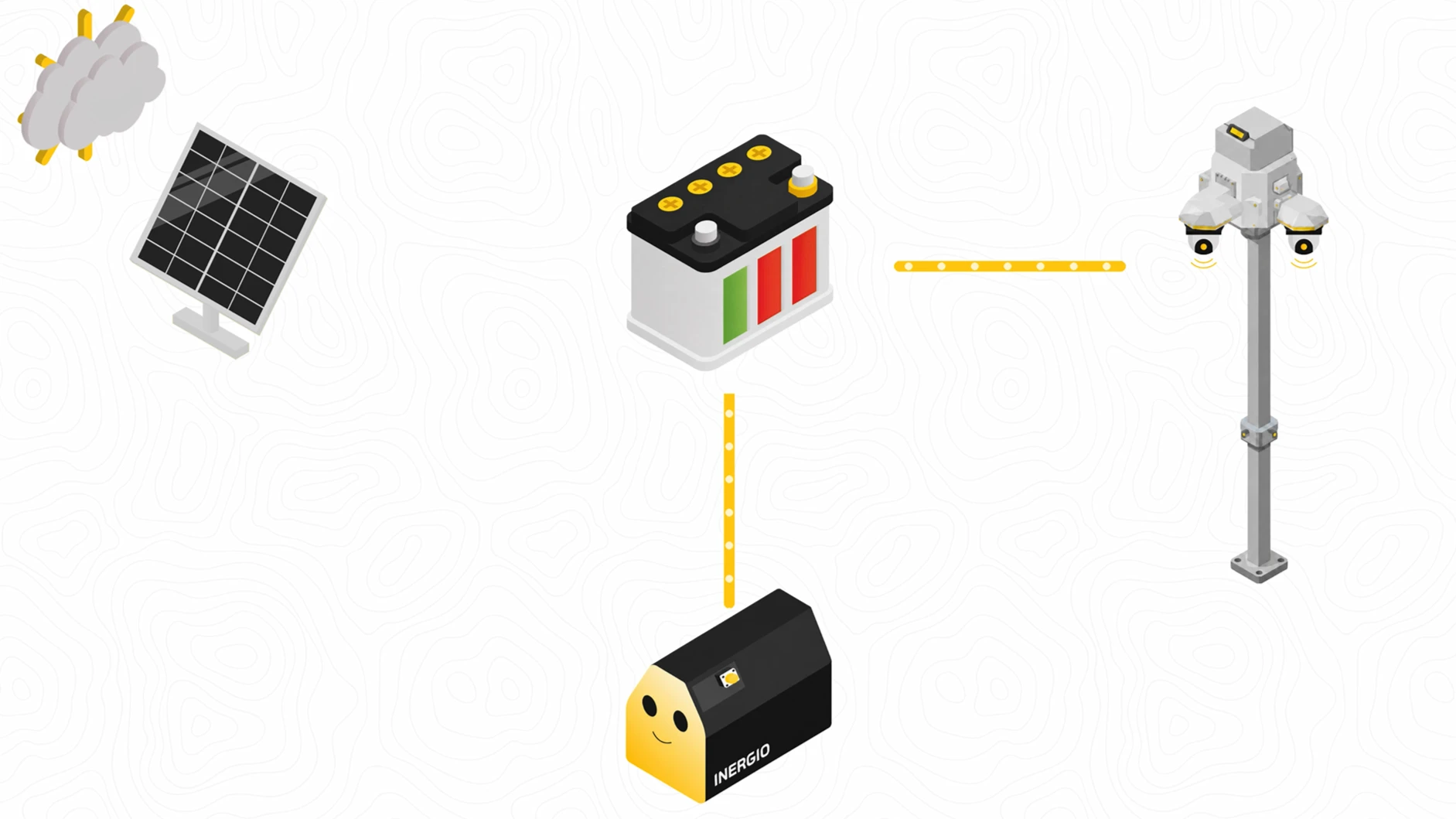
The system is usually controlled according to battery state of charge or battery voltage. When the battery reaches a defined lower threshold, the secondary power source starts and supplies power or recharges the battery. It stops once the configured upper threshold is reached. This operating logic allows the available solar energy to be used first while maintaining continuous operation during periods when solar and battery capacity alone are insufficient.
In a hybrid off-grid power system using INERGIO Mini, INERGIO Mini acts as the secondary power source. It continuously monitors battery voltage, starts automatically when the battery requires support, charges it and shuts down once the configured upper threshold is reached. In a typical northern deployment with a 100 W continuous load and 800 Wp of solar, solar can cover demand from approximately April to August, while INERGIO Mini fills the remaining seasonal energy gap using around 20 kg of propane per year.
Explore the topic in more depth: Solar and Off-Grid Power: Why Hybrid Systems Need More Than Batteries
6. Fuel cell generator
A fuel cell generator is a complete power system that converts the chemical energy of a fuel into electricity through an electrochemical process. Unlike a conventional generator, it does not first burn fuel to create heat, mechanical motion and rotation inside an engine.
The fuel-cell stack performs the electrochemical conversion, but it is only one part of the generator. A practical system also requires fuel and air management, thermal control, sensors, power electronics, exhaust treatment, automated controls and communications. These supporting components are commonly described as the balance of plant.
Different fuel cell generators use different technologies and fuels. Their operating characteristics depend on the electrolyte, operating temperature, fuel-processing architecture, rated output and surrounding system design. Fuel cell generators can operate as primary power sources or support batteries and solar panels within hybrid systems.
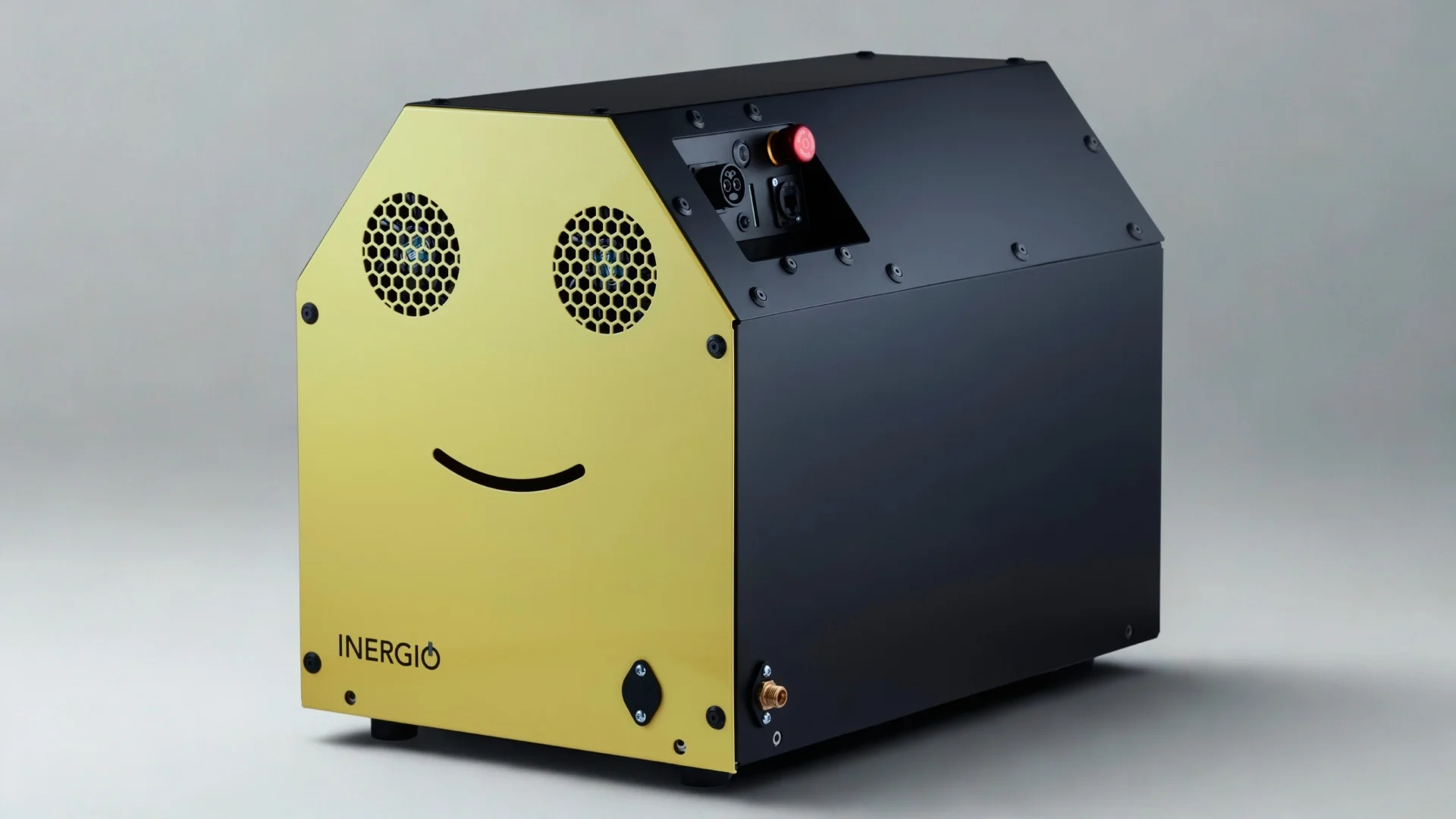
INERGIO Mini is a 140 – 170W solid oxide fuel cell generator using standard commercial propane. It prepares the fuel internally, produces DC electricity and interacts with the battery system through automated start-and-stop control. It can provide the primary power source or support a solar-battery installation when renewable production is insufficient.
Learn more about the role of fuel cells in off-grid power: Rethinking Fuel Cells for Off-Grid Power.
7. Electrochemical conversion
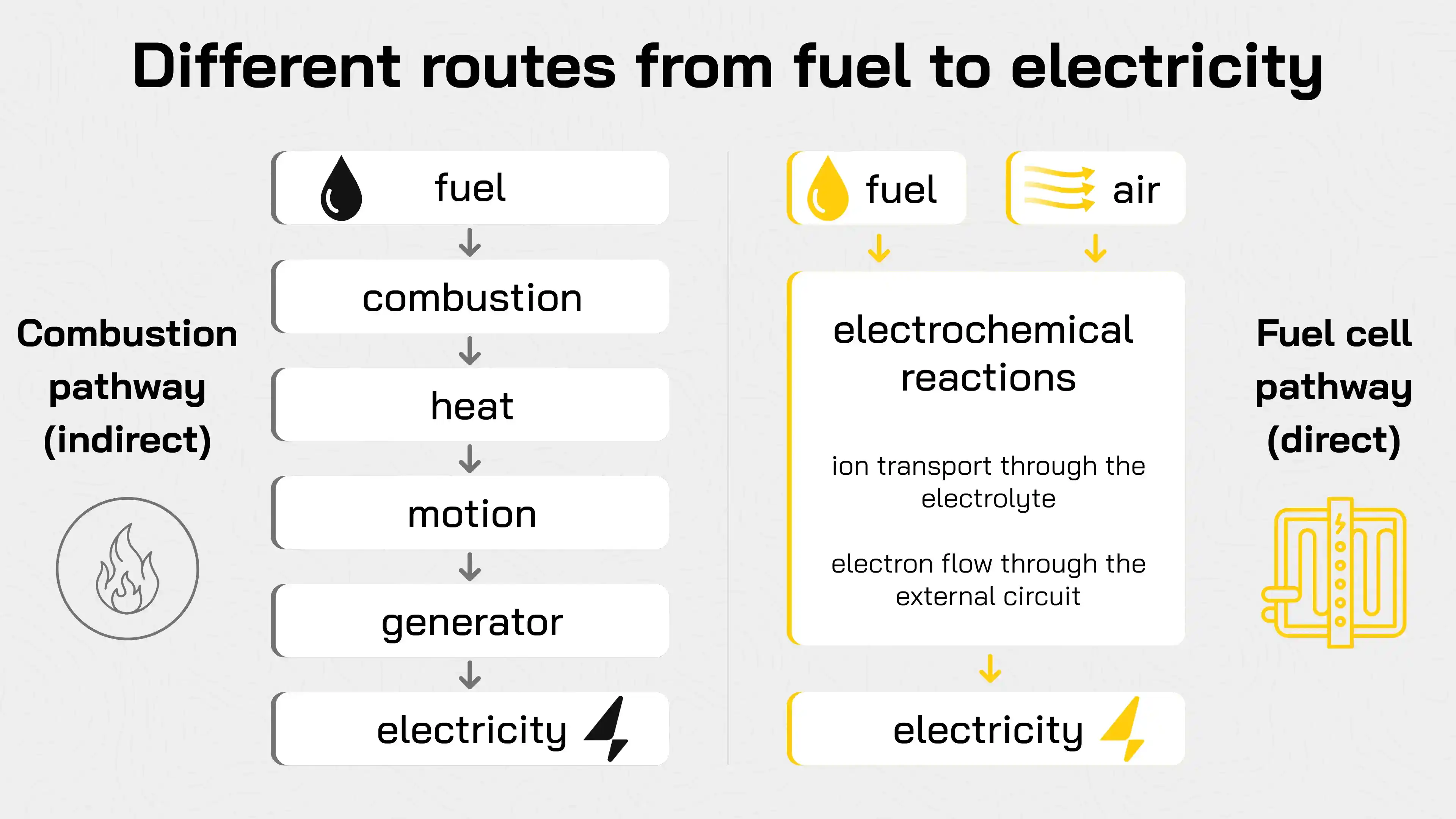
Electrochemical conversion is the direct conversion of chemical energy into electricity through reactions involving ions and electrons. In a fuel cell, the reaction is divided between two electrodes so that the electrons must pass through an external circuit, where they produce useful electrical current.
This differs from combustion-based power generation. A combustion generator releases fuel energy as heat, converts the heat into mechanical movement inside an engine and then converts that movement into electricity. Electrochemical conversion avoids the intermediate mechanical stage.
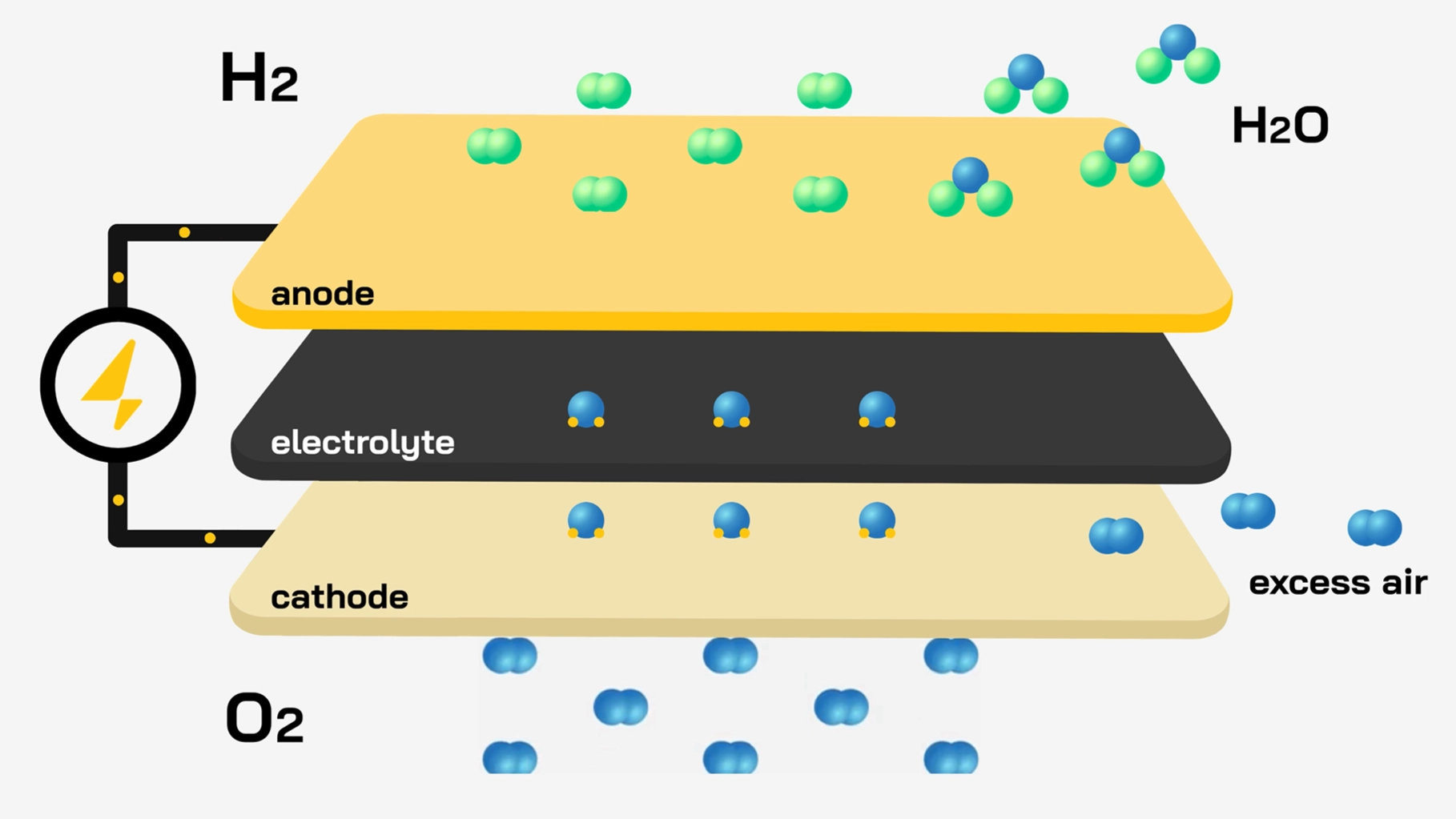
In an SOFC, oxygen from the air forms oxide ions at the air electrode. The ions pass through the solid ceramic electrolyte and react with fuel at the fuel electrode. Electrons released by this reaction return through the external circuit, completing the process.
In INERGIO Mini, propane is first reformed into a gas mixture that the SOFC stack can use electrochemically. The stack then generates electricity without an internal-combustion engine, while the resulting electrical output is conditioned for the battery and connected equipment.
Follow the electrochemical pathway in more depth: From Ions to the Field: How Solid Oxide Fuel Cells Turn Chemical Energy into Reliable Off-Grid Power.
8. Solid oxide fuel cell – SOFC
A solid oxide fuel cell, or SOFC, is a type of fuel cell that converts the chemical energy of a fuel into electricity through electrochemical reactions. It is defined by a solid ceramic electrolyte and operation at elevated temperatures.
An individual SOFC contains an air electrode, or cathode, a solid ceramic electrolyte and a fuel electrode, or anode. The electrolyte keeps fuel and air separated while allowing oxide ions to move from the cathode to the anode. Several cells are then connected to form a fuel cell stack with a useful electrical output.
In a planar SOFC stack, the cells are arranged in layers separated by interconnects. These components collect electrical current, distribute fuel and air across the cells, keep the gas streams separated and help maintain suitable sealing and temperature uniformity.
The stack is the electrochemical core of the system, but it is not a complete generator. A practical SOFC power system also requires fuel preparation, air management, thermal control, insulation, sensors, power electronics, exhaust treatment and automated controls.
High-temperature operation increases ionic conductivity and supports the processing of fuels such as natural gas, biogas and propane. It also reduces dependence on precious-metal catalysts. At the same time, the system must manage thermal expansion, controlled start-up and shutdown, stable gas flow and heat distribution around the high-temperature core.
INERGIO uses planar SOFC stacks in compact power systems designed for sustained off-grid and backup operation. In INERGIO Mini, commercial propane is prepared and reformed before reaching the stack, while the surrounding system manages air, heat, electrical output, exhaust treatment, battery interaction and remote monitoring.
Explore the complete process from electrochemistry to field operation: From Ions to the Field: How Solid Oxide Fuel Cells Turn Chemical Energy into Reliable Off-Grid Power.
9. Internal fuel reforming
Internal fuel reforming converts a hydrocarbon fuel into a gas mixture that a fuel cell can use electrochemically. The resulting gas typically contains hydrogen and carbon monoxide, which can react within a high-temperature SOFC.
Internal reforming allows a compatible hydrocarbon fuel to be prepared within the system rather than requiring externally supplied pure hydrogen. Fuels such as natural gas, biogas or propane can be processed in this way, provided that the reformer, catalysts, controls and gas-cleaning components are designed and validated for the specific fuel.
Reforming performance affects how much of the stored fuel becomes available to the electrochemical process. Fuel pressure, flow, temperature, composition and contaminants such as sulphur must therefore be managed before the gas reaches the stack.
In INERGIO Mini, propane passes through pressure and flow regulation and sulphur protection before reaching the internal reformer. The reformer converts it into a hydrogen- and carbon-monoxide-rich mixture that can be used electrochemically by the planar SOFC stack.
Read how propane moves from the cylinder to the SOFC stack: From Ions to the Field: How Solid Oxide Fuel Cells Turn Chemical Energy into Reliable Off-Grid Power.
10. Propane fuel cell generator
A propane fuel cell generator is a power system that uses propane as its fuel and converts its chemical energy into electricity through electrochemical reactions. Unlike a conventional propane generator, it does not burn propane in an internal-combustion engine to drive a rotating generator.
In an SOFC-based propane fuel cell generator, propane is prepared and reformed inside the system into a gas mixture that the stack can use electrochemically. The stack then generates electricity without an engine or a mechanical power-generation stage.
Propane can be stored in sealed cylinders or tanks and is available through established commercial supply channels. This makes it practical for applications where fuel must be transported and stored at the point of use.
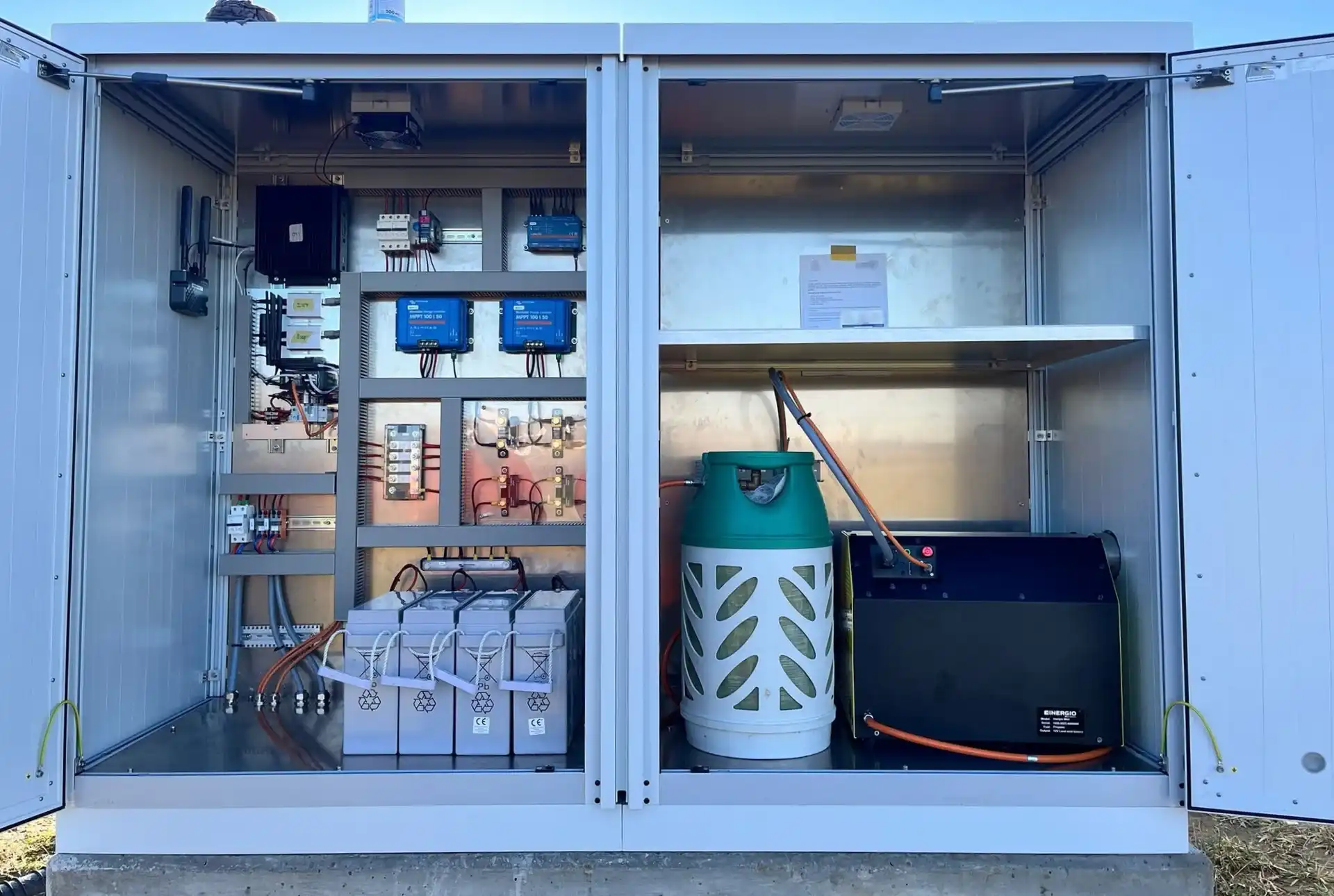
INERGIO Mini is a propane fuel cell generator based on solid oxide fuel cell technology. It consumes around 40 g of propane per hour at 150W (0.09 lb/h), and generates approximately 3.9 kWh of electricity per kilogram (1.8 kWh/lb) of propane.
Explore the topic in more depth: 3 reasons why propane is the ideal fuel for powering off-grid operations.
11. Electrical efficiency
Electrical efficiency describes the proportion of a fuel’s chemical energy that a power system converts into usable electrical energy. It is expressed as a percentage.
Higher electrical efficiency means that less fuel is required to generate the same amount of electricity. In an off-grid system, this affects fuel consumption, operating autonomy, refuelling frequency, total cost of ownership and lifecycle CO₂ emissions.
Efficiency should be evaluated under the operating conditions of the application. Generator size and load level are particularly important, since a power system may perform differently at its rated output and at partial load.
INERGIO Mini consumes around 40 g of propane per hour at 150W (0.09 lb/h) and generates approximately 3.9 kWh of electricity per kilogram (1.8 kWh/lb) of propane.
See how electrical efficiency influences lifecycle emissions: Understanding CO₂ Emissions in Off-Grid Energy Systems.
12. Cold start
Cold start describes a power system’s ability to begin its start-up sequence after it has been switched off or stored at a low ambient temperature. It is different from continued operation in cold weather and does not describe the time required to reach full output.
Cold-start capability matters for remote infrastructure because a backup power system may remain inactive until the battery reaches its lower operating threshold. If the system cannot start after prolonged exposure to low temperatures, the remaining battery energy may be depleted and the connected equipment can go offline.
Cold weather can affect fuel behaviour, batteries, lubricants, pumps, water-containing components, sensors and electronic controls. Depending on the technology, a system may require external heating, continuous frost-protection operation, seasonal adjustments or a specific fuel mixture before it can restart reliably.
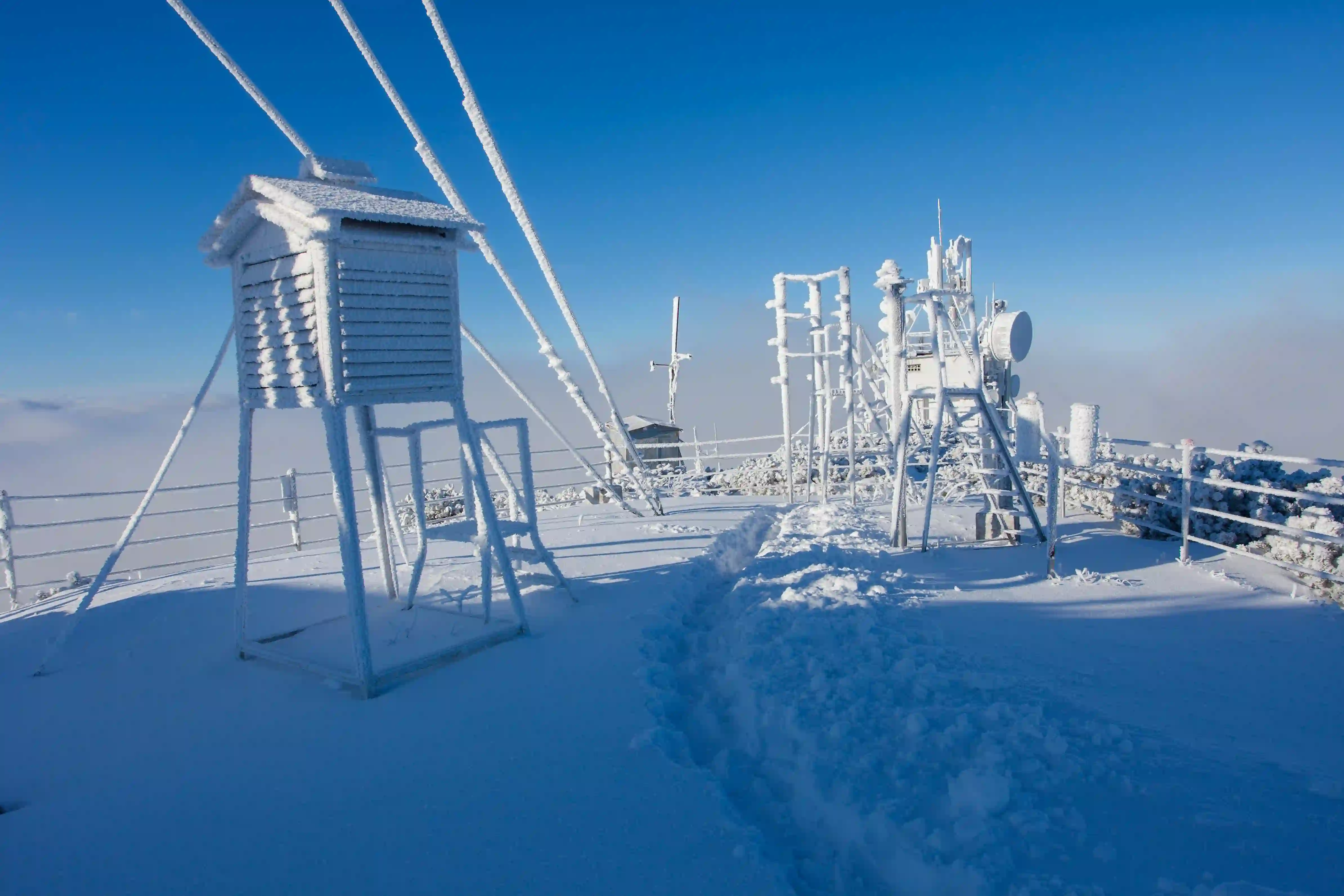
INERGIO Mini operates across an ambient temperature range of −40 °C to +55 °C (-40 to 131 °F) and can perform a true cold start after storage at sub-zero temperatures, without seasonal adjustments, special weather settings or continuous frost-protection operation. Its SOFC technology uses a solid ceramic electrolyte, while propane is supplied as a gas during operation, reducing dependence on liquid fuel mixtures and complex water-management systems that may be vulnerable to freezing.
View INERGIO Mini’s operating temperature range and cold-start capability: INERGIO Mini-Resilience in Harsh Weather.
13. Remote monitoring
Remote monitoring refers to the collection and transmission of operating data from equipment located away from the operator. It provides visibility into system condition without requiring an on-site inspection.
For off-grid infrastructure, remote visibility helps operators confirm that equipment remains online, track battery and fuel conditions, identify faults and plan interventions before travelling to the site. This is especially important for fleets of surveillance, traffic, environmental and industrial systems distributed across mobile or hard-to-access locations.
The information available depends on the system and its communication architecture. Typical parameters include operating status, voltage, current, temperature, battery condition, fuel consumption, remaining fuel, operating hours and active errors. Remote monitoring does not eliminate every site visit, but it can reduce unnecessary inspections and support faster diagnostics and better-planned maintenance or refuelling.
The INERGIO graphical user interface provides visibility into fuel-cell status, battery data, fuel consumption, fuel level, voltage, temperature, operating mode and system errors. Operators can switch between multiple units within the same interface to maintain visibility across a deployment. Depending on the installation, INERGIO supports Ethernet, USB and RS-232 communication.
See the monitoring and communication options available with INERGIO Mini: INERGIO Mini-Remote Monitoring.
14. Fuel logistics for remote sites
Fuel logistics for remote sites covers the sourcing, transport, storage, fuel-level monitoring and replenishment of the fuel required by an off-grid power system. It determines how fuel reaches the site, how much can be stored and how frequently the supply must be refilled or replaced.
The required fuel volume depends on the application’s load profile, operating hours, electrical efficiency and the contribution of solar or other energy sources. Site accessibility, transport distance, seasonal weather, local fuel availability, storage capacity and delivery lead times also influence the refuelling strategy.
The form in which a fuel is supplied is also relevant. Some commercial methanol fuel-cell systems use manufacturer-specific cartridges. This creates dependence on the appropriate cartridge format and supply channel and requires advance inventory planning. Hydrogen systems commonly use compressed-gas cylinders or tanks, together with compatible pressure equipment and suitable supply infrastructure.
For distributed off-grid infrastructure, these requirements must be managed across multiple separate locations. Operators need to consider the number and size of fuel containers, expected refuelling intervals, available reserves, site-access restrictions and contingency supply. Every additional delivery involves travel, labour and coordination, so fuel logistics should be evaluated alongside fuel price and system efficiency.

INERGIO Mini uses standard commercial propane supplied in sealed cylinders or tanks, without dependence on proprietary fuel cartridges or dedicated hydrogen infrastructure. At 150W, it consumes approximately 40 g of propane per hour (0.09 lb/h) and generates approximately 3.9 kWh of electricity per kilogram (1.8 kWh/lb) of propane. These figures provide a basis for estimating annual fuel requirements and refuelling intervals. Cylinder or tank capacity can then be selected according to the site load, solar contribution and required autonomy.
Estimate annual fuel requirements for a specific site: INERGIO Off-Grid Power Calculator.
15. Total Cost of Ownership - TCO
For an off-grid power system, total cost of ownership represents the complete cost of acquiring, operating and replacing the system over a defined period. It includes the initial hardware and installation cost, as well as fuel, maintenance, replacement parts, refuelling, site visits, transport, downtime and eventual equipment replacement.
For remote installations, TCO is strongly influenced by the operating environment. Site accessibility, continuous energy demand, seasonal solar availability and the frequency of maintenance or refuelling can create significant costs beyond the original purchase price.
A TCO comparison should therefore use the same load, operating period and site assumptions for every technology. Relevant inputs include annual energy demand, fuel consumption, fuel price, maintenance intervals, expected lifetime, replacement cycles and the cost of reaching the site. The result is an estimate rather than a fixed value, since actual costs depend on location, system design, weather, installation and operation.
For INERGIO Mini, low fuel consumption, autonomous operation, minimal maintenance and a lifetime of more than 15,000 operating hours reduce several recurring cost categories. The INERGIO Off-Grid Power Calculator applies site-specific inputs to compare annual operating expenses and cumulative lifetime cost with alternative power technologies.
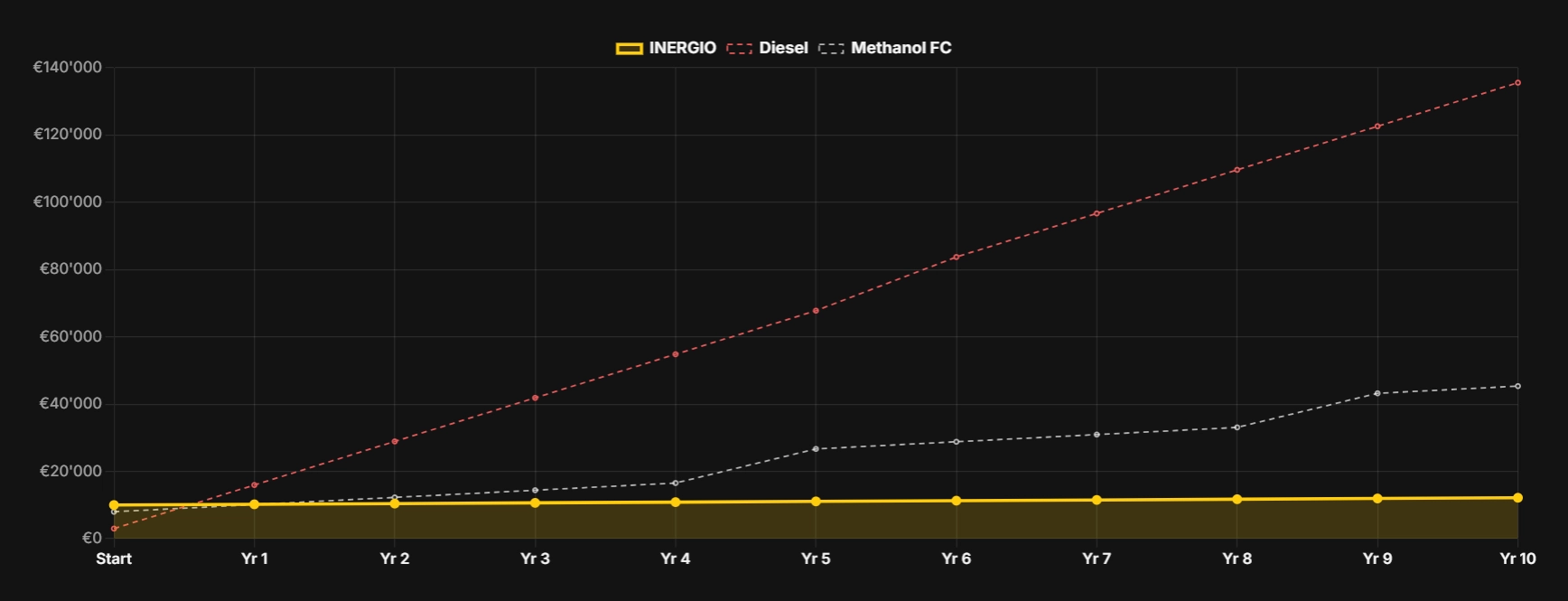
Explore TCO for your specific off-grid configuration: INERGIO Off-Grid Power Calculator.
16. Lifecycle CO₂ emissions
Lifecycle CO₂ emissions represent the total greenhouse gas emissions associated with an energy system throughout its lifetime. They include emissions from equipment manufacturing, fuel production and transport, system operation, maintenance and end-of-life treatment.
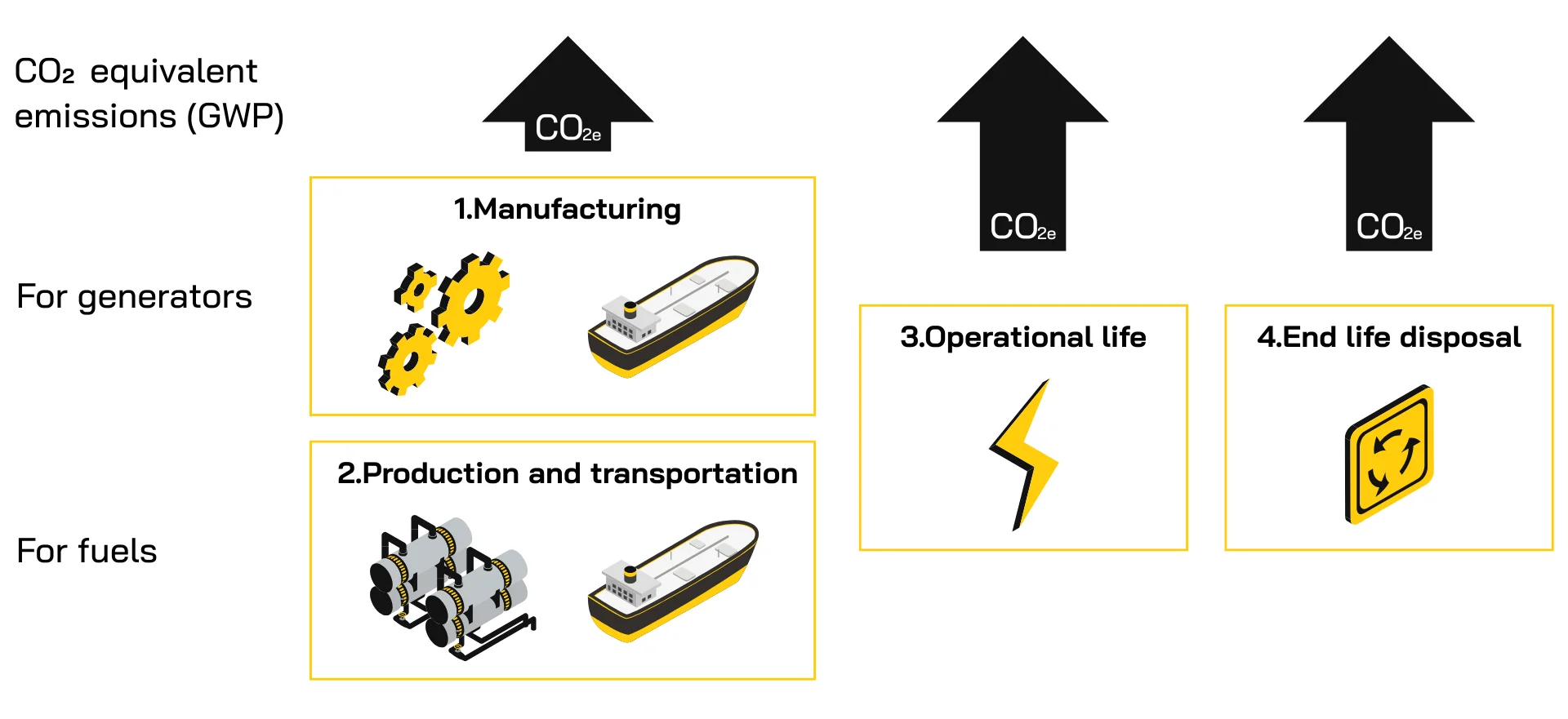
They are generally expressed in grams of CO₂-equivalent per kilowatt-hour of electricity generated, or g CO₂-eq/kWh. Using this common unit makes it possible to compare different fuels and power technologies on the same basis.
In off-grid energy systems, the result depends on factors such as electrical efficiency, fuel consumption, operating hours, equipment lifetime, fuel origin and system utilisation. Manufacturing-related emissions are distributed across the total electricity produced during the system’s lifetime, while operational emissions depend largely on the fuel used and the efficiency of the conversion process.
Based on this lifecycle methodology, INERGIO calculates approximately 737 g CO₂-eq/kWh with propane, 239 g CO₂-eq/kWh with bio-propane, and 157 g CO₂-eq/kWh with green hydrogen. These results reflect the higher electrical efficiency and lower fuel consumption of INERGIO’s SOFC systems. With propane, INERGIO Mini operates at more than 30% electrical efficiency, compared with around 16% conversion efficiency for small conventional generators, which can exceed 1,900 g CO₂-eq/kWh of usable electricity in off-grid operating conditions.
Explore the topic in more depth: Understanding CO₂ emissions in off-grid energy systems.