
How Big Is the Off-Grid Power Market? A 2026 Data-Backed Breakdown
A look at the growing demand for reliable off-grid power across critical infrastructure
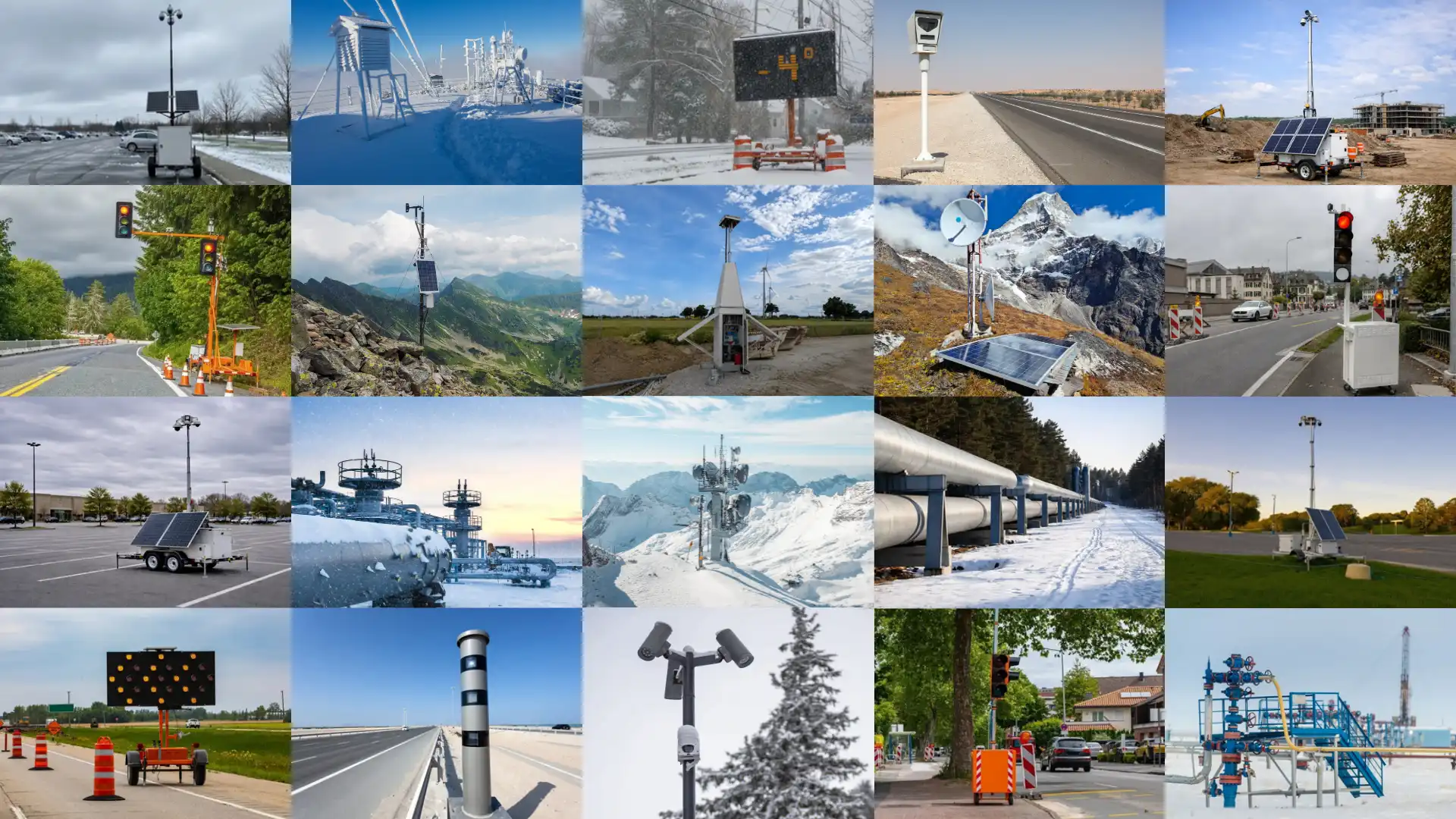
Why off-grid power is becoming critical infrastructure
Off-grid power supports a large and operationally critical part of modern infrastructure.
Mobile surveillance trailers, temporary traffic systems, environmental monitoring stations, oil and gas equipment, telecom sites, and remote industrial assets often depend on power systems that can operate without a stable grid connection. These are not marginal applications, but distributed systems that support safety, security, data collection, automation, and continuity in the field.
Off-grid power is a well-established necessity, but its role is expanding fast. More assets are being deployed in remote, mobile, temporary, or weak-grid locations. More of these assets are connected, collecting data, and supporting real-time decision-making.
And as AI and edge computing move into field infrastructure, the need for continuous, unattended power becomes even more important. The more intelligence moves into the field, the more valuable reliable off-grid power becomes.
This is why the market should not be seen only as a question of electricity generation. In many applications, the real question is operational: how do you keep distributed assets running without constant site visits, battery swaps, refueling, maintenance, and downtime?
That is what makes off-grid power a strategic infrastructure market, not just a remote energy solution.
What is off-grid power?
Off-grid power refers to energy systems that operate independently from the main electrical grid. These systems may use solar panels, batteries, diesel or petrol generators, fuel cells, wind, hybrid systems, or microgrids.
For large-scale energy discussions, off-grid power often means remote communities, island grids, mining sites, telecom towers, or military bases. These are important markets, but they are only part of the picture.
There is also a large and growing category of distributed off-grid infrastructure: systems that require continuous power, often for weeks or months at a time, in locations where grid access is unavailable, unreliable, or impractical. This includes surveillance cameras, traffic lights, variable message signs, weather stations, industrial sensors, remote communications equipment, and monitoring systems.
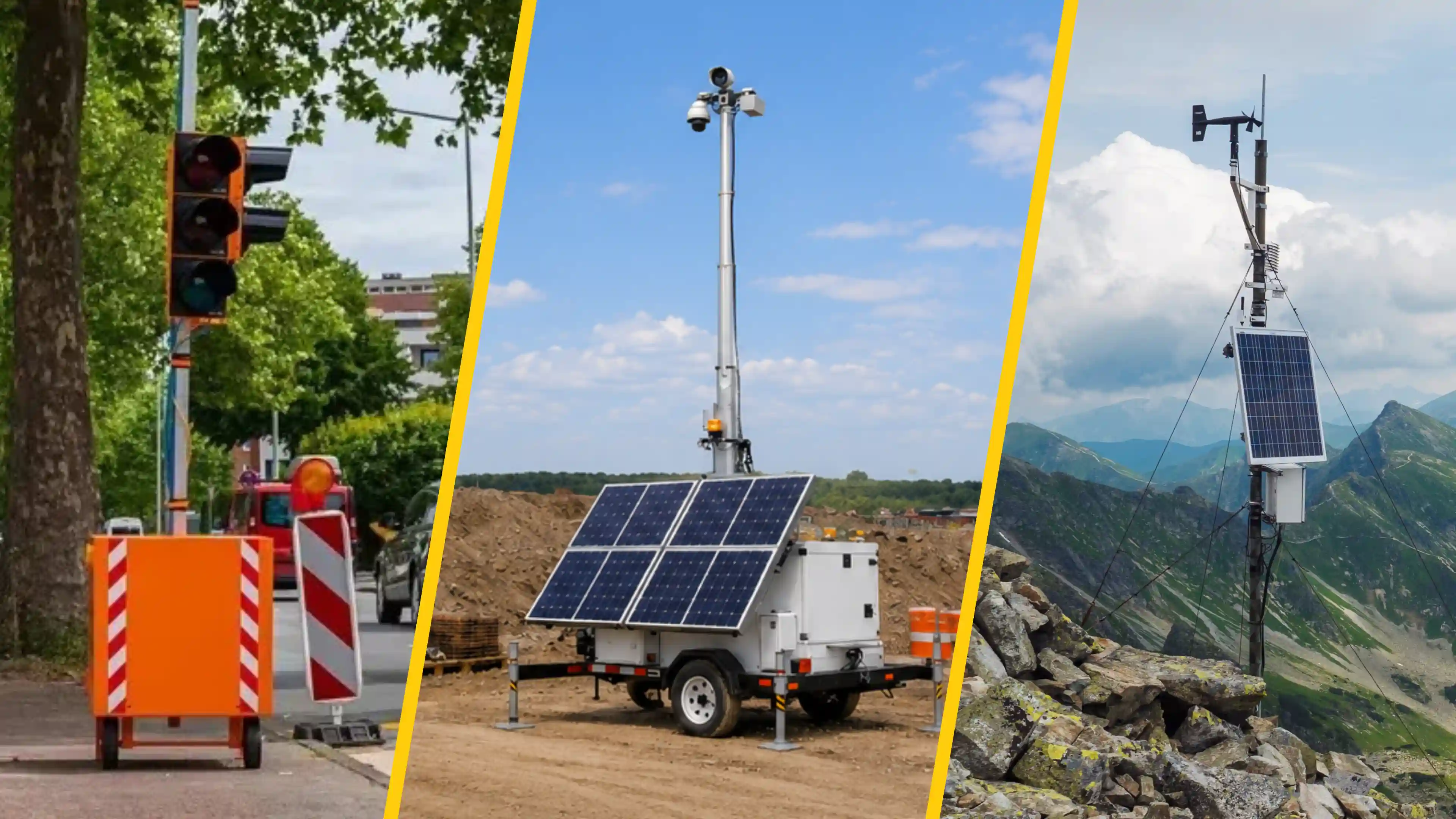
This segment is commercially very important because although electricity demand can be limited, the operations it supports are high-value. When a surveillance trailer loses power, the site is no longer protected. When a traffic system goes down, safety and mobility are affected. When an environmental monitoring station stops collecting data, the value of the entire system is reduced.
In these applications, the power system is not just a component, but the layer that protects uptime, autonomy, and operational value in the field.
How large is the off-grid power market?
It is difficult to capture the off-grid market with one single number because it is spread across several application-specific industries. External market data shows that the industries relying on distributed off-grid infrastructure are already large and growing.
In surveillance, Growth Market Reports1 estimates the global solar-powered security camera market at USD 1.58 billion in 2025, with projected growth to approximately USD 5.47 billion by 2034.
In traffic management, the most relevant application is the field-deployed equipment that needs reliable autonomous power. According to Report Prime2, the portable traffic signals market is expected to grow from USD 1.75 billion in 2025 to USD 3.02 billion by 2032. These systems point directly to the kind of traffic infrastructure where reliable power can reduce battery swaps, site visits, and operational disruption.
In remote monitoring and communication infrastructure, The Insight Partners3 estimates the SCADA system market at USD 12.93 billion in 2024, with projected growth to USD 24.42 billion by 2031. SCADA systems rely on distributed field devices, sensors, controllers, and communication nodes to monitor and control infrastructure across utilities, oil and gas, water, power, and industrial operations. Many of these assets operate in remote or hard-to-access locations, where reliable autonomous power is essential for data collection, communication, and control.
In environmental monitoring, Market Research Future4 estimates the environmental monitoring market at USD 13.1 billion in 2024, with continued growth driven by the need for real-time environmental data, regulation, and monitoring infrastructure.
Combined, these surveillance, traffic management, remote monitoring, communication infrastructure, and environmental monitoring markets represent nearly USD 30 billion in current market value based on recent external estimates.
And this still captures only part of the wider market. Adjacent sectors such as solar traffic lights, portable variable message signs, telecom tower power systems, cathodic protection, oil and gas SCADA, and other remote industrial monitoring applications expand the broader infrastructure landscape even further. Depending on which adjacent segments are included, the combined market universe exceeds USD 60 billion.
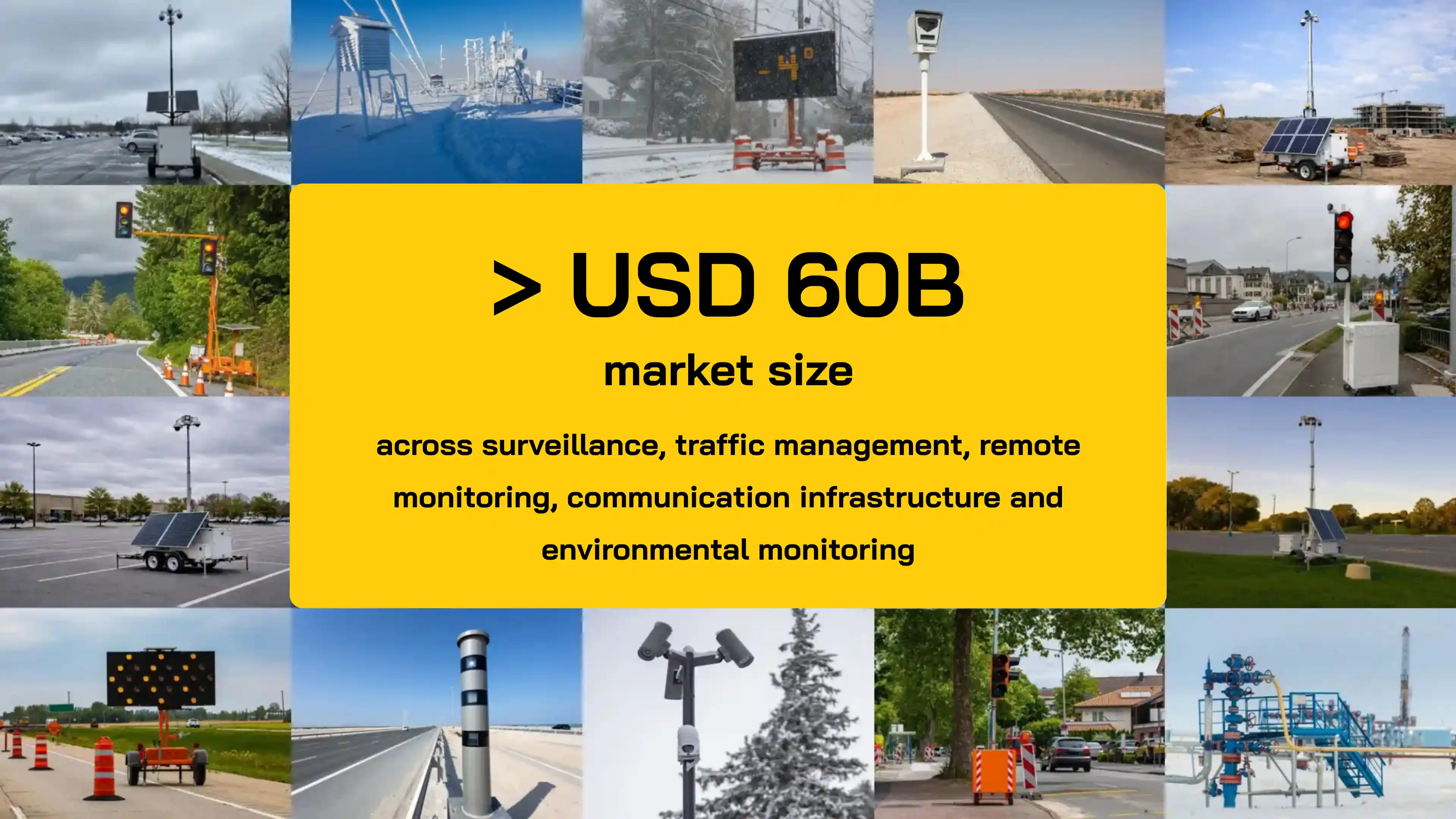
This is not a direct estimate of the off-grid power market itself. It shows something more specific and more relevant: the scale of the application areas where distributed assets increasingly need reliable autonomous power in the field.
Across these sectors, the common driver is the same. Critical assets are being deployed in places where grid access is unavailable, unreliable, too expensive, or too slow to deploy. And as these assets become more connected, data-driven, and operationally important, the reliability of their power supply becomes part of the value they deliver.
AI-enabled infrastructure depends on uptime
AI-enabled infrastructure depends on reliable energy, and that dependency is already showing up in hardware. Camera manufacturers are building AI processing directly into off-grid, solar and battery-powered security cameras, running detection and analysis on the device itself rather than sending raw footage to the cloud.
This matters because of where the processing happens. A passive sensor that sends occasional data has one power profile. A camera running AI detection locally, in the field, has another. It needs to process, not just record.
According to Mordor Intelligence5, the global AI in video surveillance market is projected to grow from USD 5.98 billion in 2025 to USD 13.26 billion by 2031, as smart-city rollouts and falling edge-AI chipset costs push more processing onto the camera itself rather than the cloud.
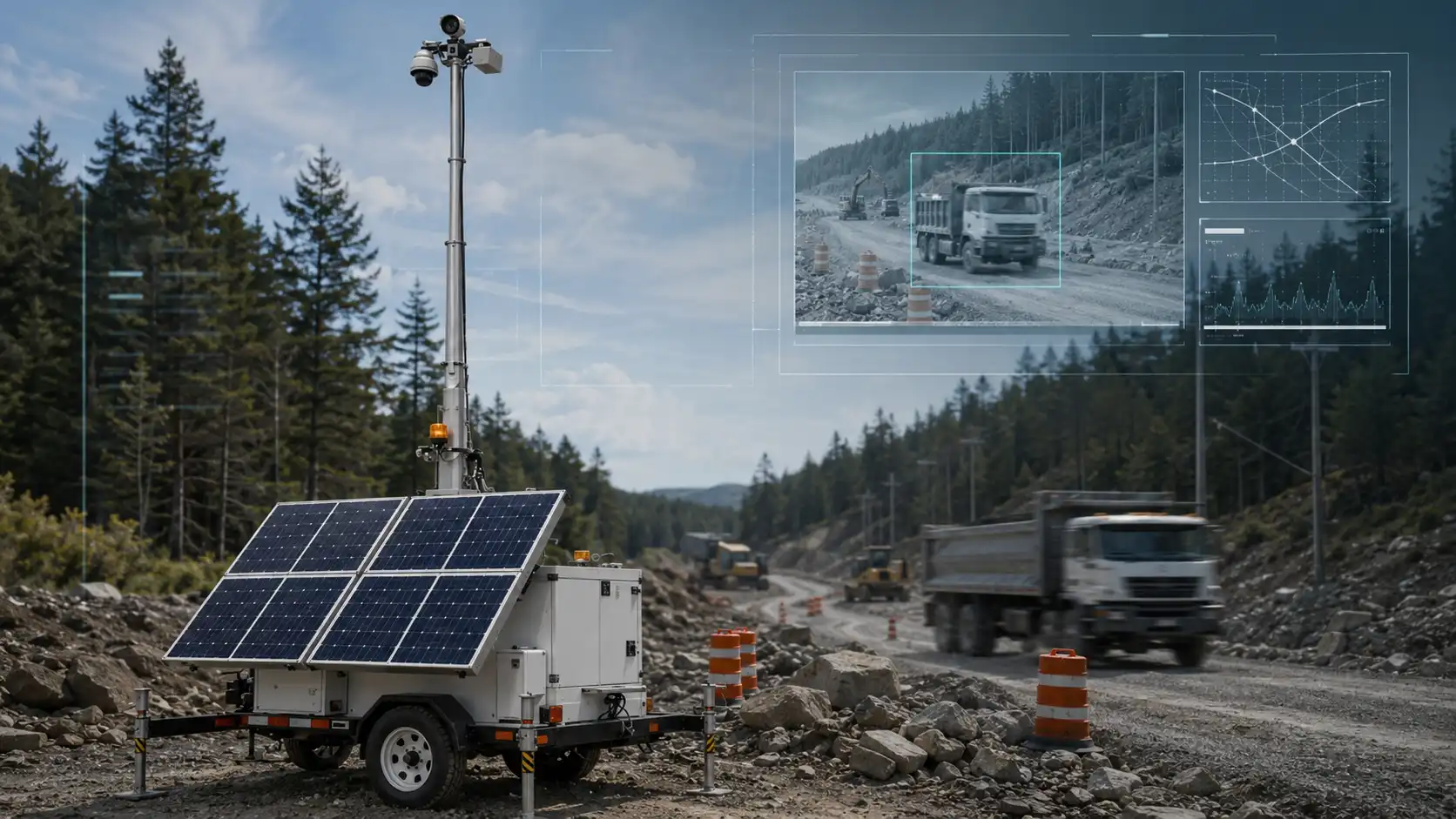
Faster local decisions mean more local compute and more local compute means more local power demand, in exactly the remote, off-grid locations this article is about.
If an AI-enabled traffic system loses power, it cannot adapt. If a surveillance trailer goes offline, the analytics layer disappears with it. If an environmental station stops collecting data, the model behind it has less information to work with.
AI makes remote infrastructure more valuable and also makes uptime more important.
Today’s off-grid power solutions and their tradeoffs
There is no single perfect off-grid power solution. Different applications need different system designs. In many cases, the best approach is to combine complementary technologies in a hybrid system. Solar, batteries and a secondary power source can work together to maintain reliable operation when renewable production varies.
Solar and battery systems are a strong foundation for many off-grid applications. They are quiet, clean during operation, widely understood, and can reduce fuel logistics when solar production is high.
The limitation is that solar production is not constant. It changes with season, weather, shading, dust, snow, and system orientation. Batteries can bridge overnight operation and short periods of poor weather, but they do not create energy. During long low-solar periods, the battery becomes a countdown.
Diesel and petrol generators are familiar, widely available, and able to deliver high power output. But for continuous field applications, they can be a poor operational fit. They are noisy, require maintenance, produce emissions, need refueling, and often operate inefficiently at partial load. Over time, the real cost is not only the generator. It is the service schedule, fuel logistics, site visits, and operational disruption.
Methanol fuel cells are quiet and established in some autonomous power applications. They can be useful for systems where reduced noise and lower maintenance are important. But depending on the system and deployment, operators may face proprietary fuel cartridges, high fuel cost, performance degradation over time, limited lifetime, cold-weather considerations, and fuel logistics constraints.
Propane solid oxide fuel cells like INERGIO offer another approach. They convert fuel into electricity electrochemically, rather than through combustion, and can provide continuous power with low noise, high efficiency, and minimal maintenance.
For off-grid applications, propane has a practical advantage: it is widely available, easy to store, and already used in many remote, industrial, and mobile settings. A propane SOFC can operate as a standalone power source or as a backup layer in a hybrid solar-battery system.
This is especially relevant when solar and batteries are a strong foundation, but not enough to guarantee year-round operation.
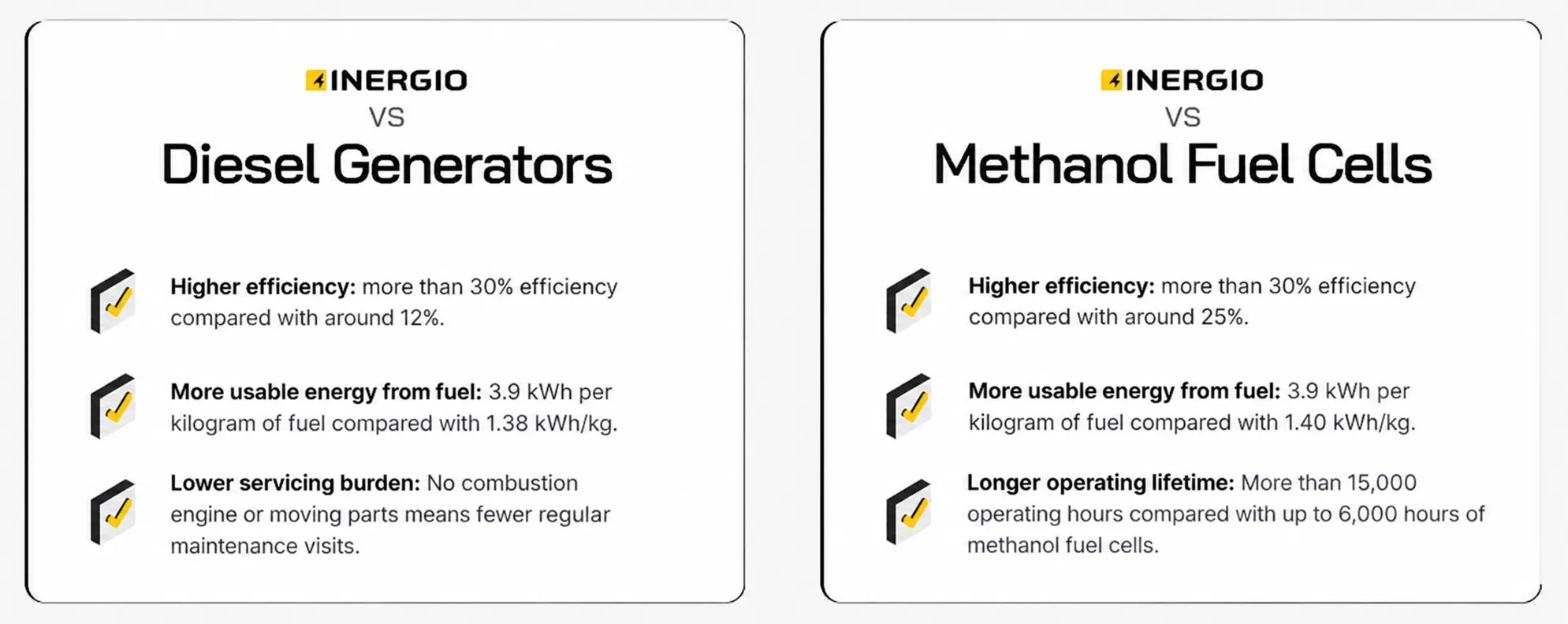
The best off-grid power solution is not always the one with the lowest upfront cost. In distributed infrastructure, the more important question is often which system can keep the asset online with the fewest interventions over its lifetime.
The operational cost of unreliable power
The economic value of off-grid power is often hidden in operations.
For a single deployment, a battery swap or refueling visit may look manageable. Across a fleet, it becomes a cost structure. Each intervention can involve technician time, travel distance, scheduling, fuel handling, access restrictions, and the risk that the asset is already offline by the time the team arrives.
The real costs include maintenance, refueling, battery swaps, truck rolls, downtime, lost data, emergency interventions, service-level risk, and fleet management complexity. (Try the INERGIO Off-Grid Power Calculator. )
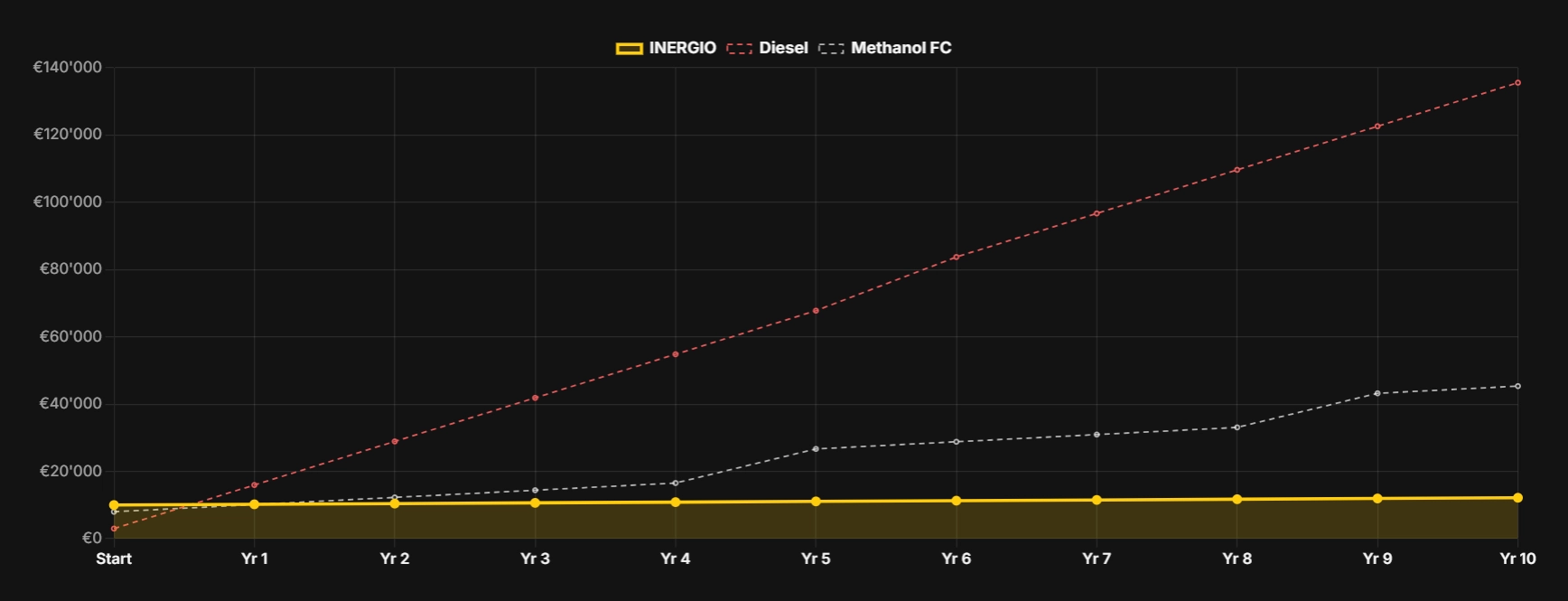
This is why reliability matters so much in the off-grid market. The value is not only in producing electricity. It is in keeping distributed assets alive without constant human attention.
A surveillance trailer that needs repeated battery swaps creates recurring work for the operator. A temporary traffic system that requires frequent visits to recharge or replace batteries adds cost and complexity to every rental or deployment. A monitoring station that fails during winter may lose the data it was installed to collect.
The larger the fleet, the more valuable autonomy becomes.
Where INERGIO fits
INERGIO Mini is designed for applications where continuous autonomy, reliability, and fewer site interventions matter.
It is a compact propane-powered solid oxide fuel cell system for autonomous off-grid and backup power. It can operate as a standalone power source or as a backup layer in a hybrid solar-battery system.
When solar and batteries are enough, they can carry the load. When battery levels drop, the fuel cell provides the stable power layer that keeps the system running.
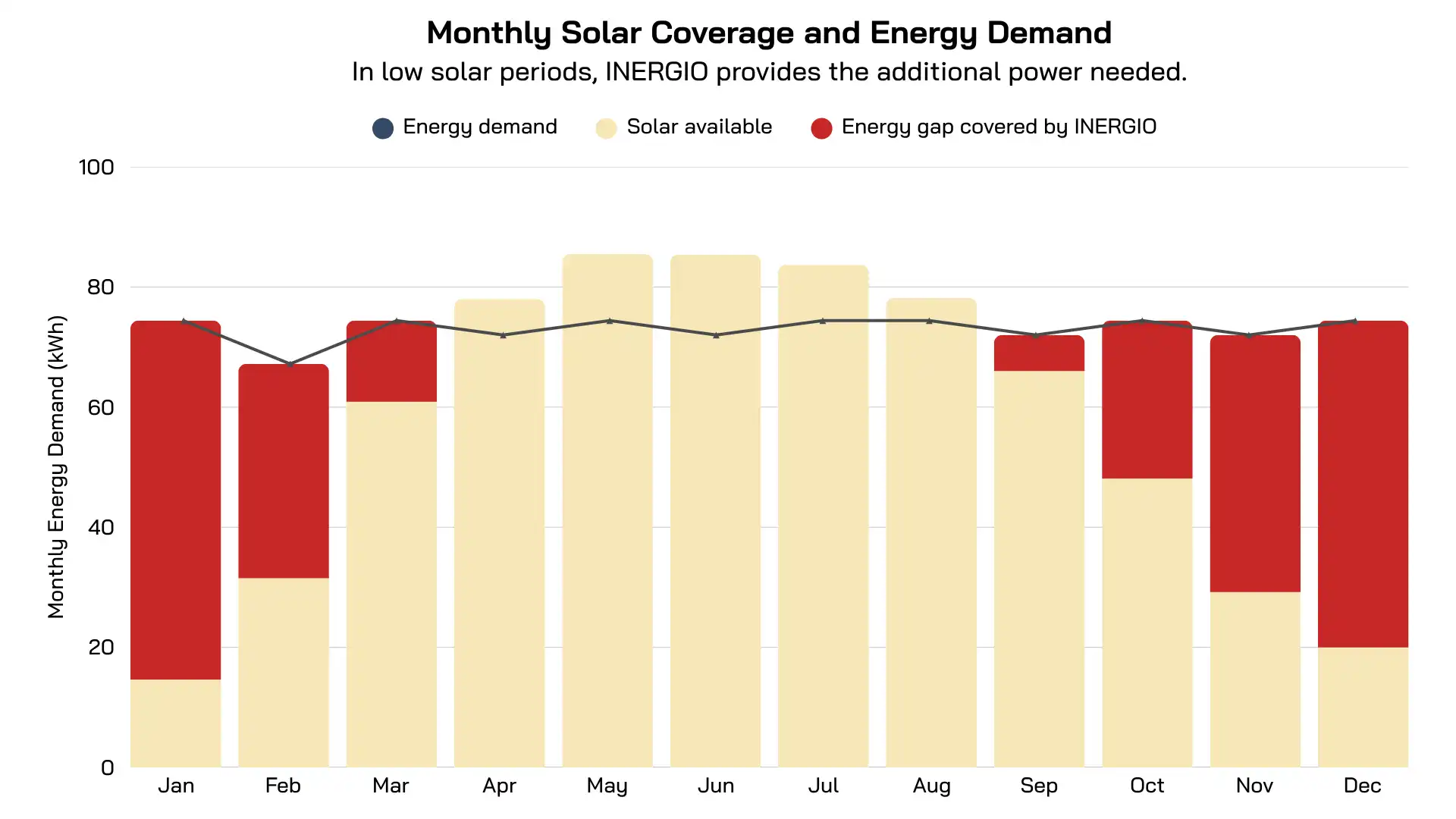
This makes INERGIO especially relevant for applications where weather dependency, battery swaps, generator maintenance, fuel logistics, or downtime create operational cost.
The INERGIO Mini delivers 140 to 170 W of continuous electricity, operates from -40 °C to +55 °C, runs on standard commercial propane, and is designed for long operating life with minimal maintenance. It is quiet, compact, and suitable for remote assets such as surveillance systems, traffic management equipment, environmental monitoring stations, and industrial monitoring infrastructure.
The role of INERGIO is not to replace every off-grid technology. In many systems, solar remains the right foundation. Batteries remain essential. The gap appears when solar and batteries alone cannot guarantee continuous operation, and combustion generators create too much maintenance, noise, or operational burden.
INERGIO addresses that gap between weather-dependent solar-battery systems and maintenance-heavy generators.
Conclusion: off-grid power is an infrastructure market
The off-grid power market is growing because more critical assets are being deployed beyond reliable grid access. But the strongest driver is not only power generation. It is uptime, autonomy, and operational simplicity.
Surveillance systems, traffic infrastructure, environmental sensors, oil and gas equipment, telecom sites, and remote industrial assets all depend on continuous power to deliver value. As these systems become more connected and more intelligent, the cost of failure increases.
For critical infrastructure in the field, INERGIO Mini is designed to provide the reliable power layer that keeps remote systems online, whether they support surveillance, traffic management, environmental data, industrial monitoring, or AI-enabled infrastructure.
As remote infrastructure becomes smarter, the power systems behind it must become more reliable. And as AI continues to expand, the same need for reliable, distributed energy is expected to reach larger energy-intensive systems, including data centers. This will create demand for higher-power solutions built on the same principles of autonomy, efficiency, and low-maintenance operation.
Eventually, the future of off-grid power will be defined by systems that can scale reliability from small field assets to larger distributed energy needs.
Indicative sources and further reading:
1. Growth Market Reports - Solar-Powered Security Camera Market
2. Report Prime - Portable Traffic Signals Market
3. The Insight Partners - SCADA System Market
4. Market Research Future - Environmental Monitoring Market
5. Mordor Intelligence - AI in Video Surveillance Market
Market estimates vary depending on methodology, scope, and definition. The sources above are used as indicative references for the scale and growth of relevant application markets.