
Diesel Generators vs Fuel Cells: Which Is Right for Your Remote Power Application?
Diesel generators, methanol fuel cells, and propane SOFCs offer different approaches to off-grid power, with important differences in autonomy, maintenance, and long-term costs.
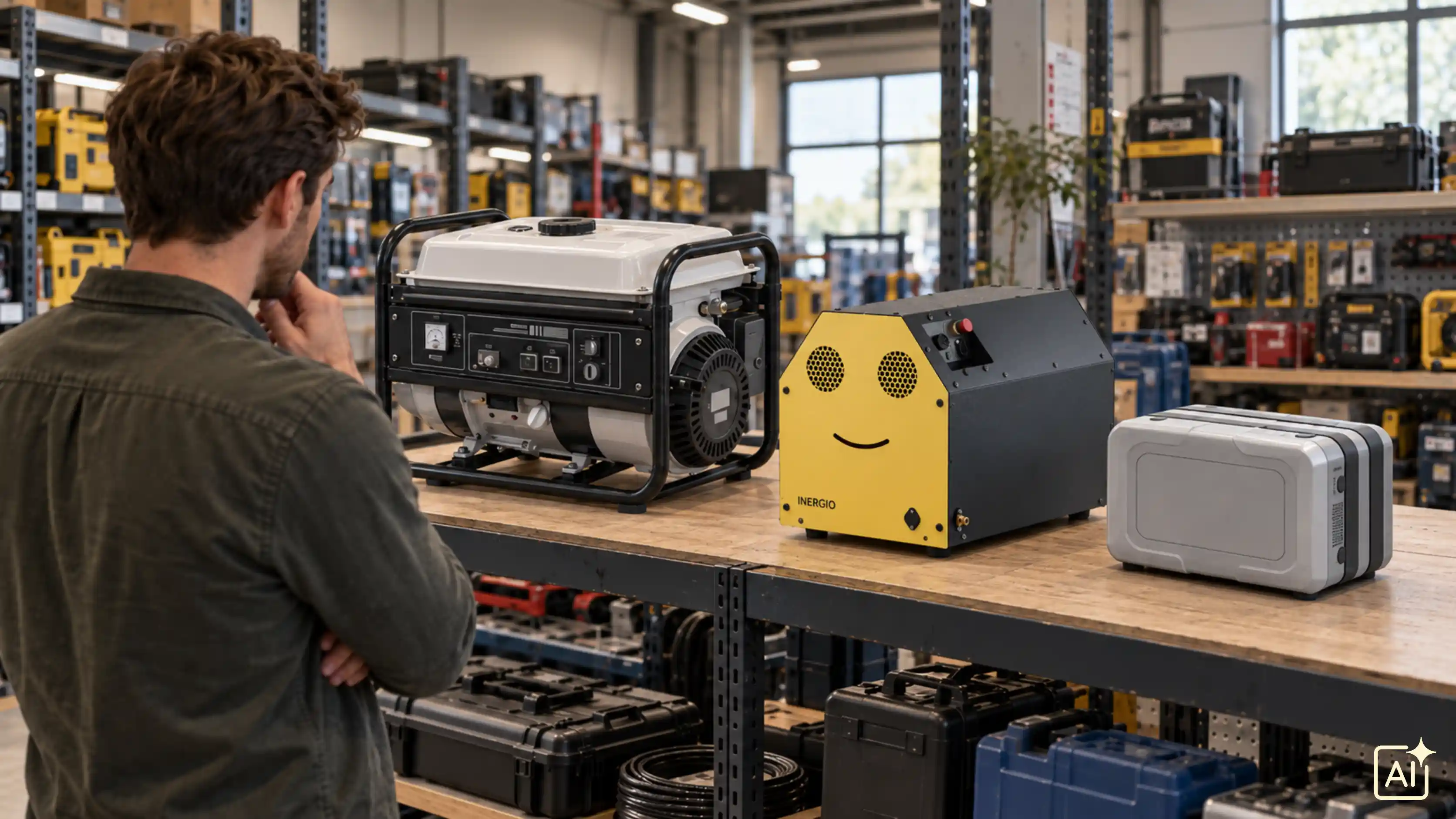
Keeping equipment powered at a remote location sounds straightforward. Install a generator, connect a battery, or add solar panels, and the system is ready to operate. In practice, things are rarely that simple.
Consider a surveillance trailer monitoring a remote construction site. Its cameras, sensors, and communication equipment need electricity around the clock. But someone also needs to make sure the power system can keep up, whether that means refueling, servicing a generator, or managing periods when solar production falls short. Every intervention takes time. And when an installation is difficult to access, keeping the equipment running can become more expensive than expected.
This is why choosing an off-grid power system involves more than comparing purchase prices or electrical specifications. The real question is how reliably a technology can supply electricity, under the conditions of a particular site, with as littleo perational intervention as possible.
Diesel generators have long been a familiar option. Fuel cells offer an increasingly relevant alternative, particularly for remote applications where autonomy and maintenance requirements play a central role.
Understanding the differences between diesel generators, methanol fuel cells, and propane-powered solid oxide fuel cells (SOFCs) can help operators choose a solution that fits their equipment, operating environment, and long-term requirements.
Diesel generators and fuel cells: What's the difference?
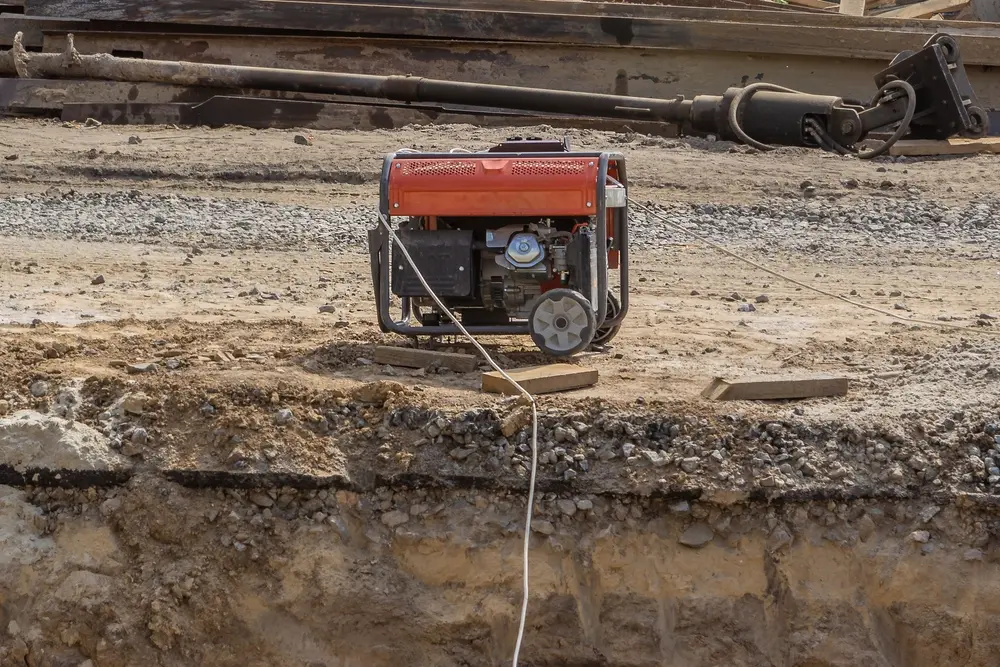
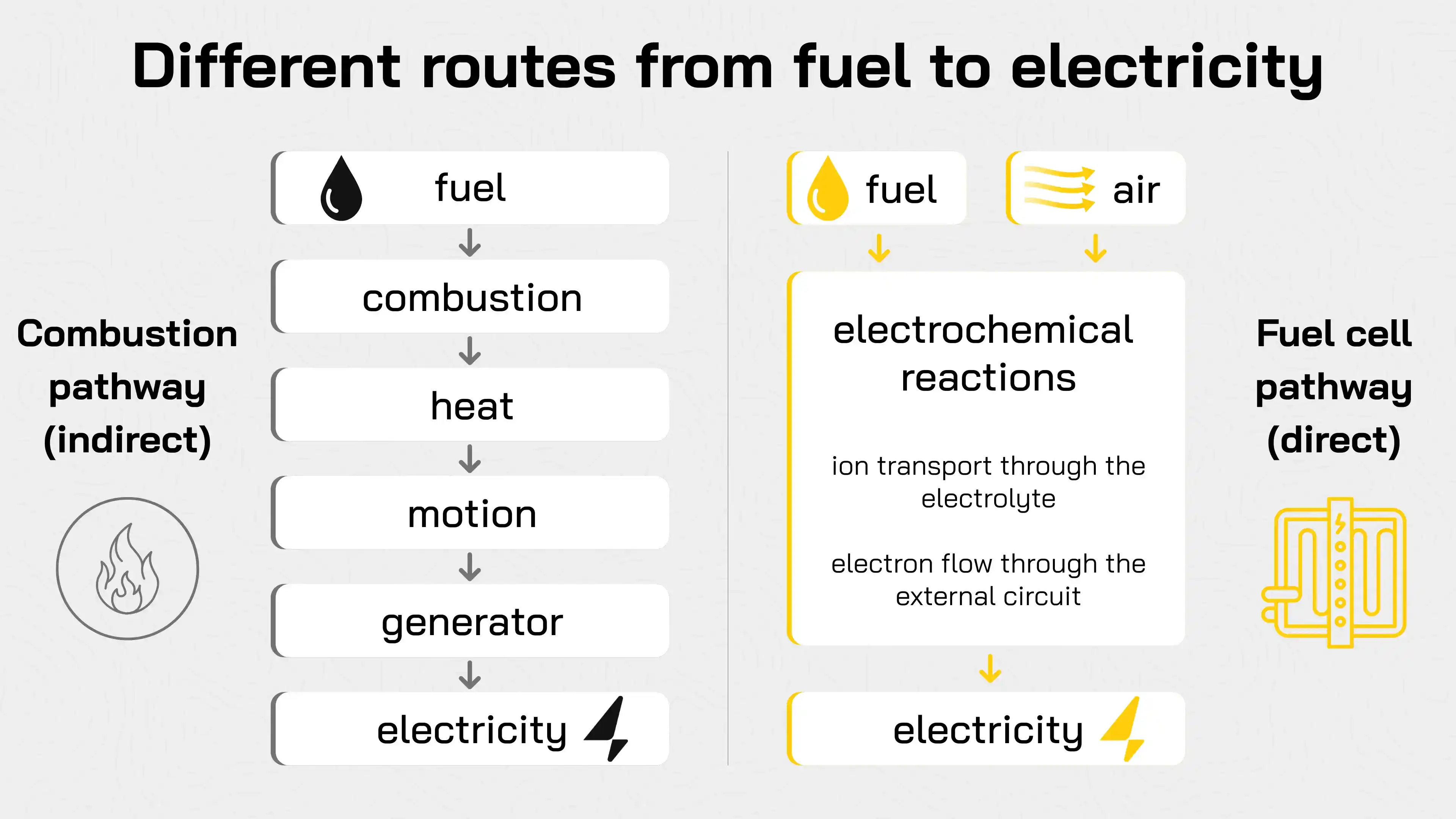
A diesel generator produces electricity by burning fuel in an engine that drives an electrical generator. It's a well-established technology, available in a wide range of power ratings and used across many applications. For installations requiring substantial electrical output and with convenient maintenance access, diesel remains a practical choice.
However, supplying enough electricity is only part of the challenge, especially for remote installations expected to operate continuously with little human intervention. An internal combustion engine requires regular servicing. Oil changes, filters, mechanical wear, and refueling all need attention. Diesel generators can also produce noise and local exhaust emissions, adding further considerations for installations in sensitive environments.
Fuel cells work differently. Instead of using an engine to drive a generator, they convert the chemical energy of a fuel directly into electricity through electrochemical reactions. This eliminates many of the moving components associated with conventional generation and enables quieter operation with fewer routine mechanical maintenance requirements. For remote infrastructure, these characteristics are particularly attractive.
Yet the term fuel cell describes several technologies, each with different fuels, operating principles, and practical characteristics. Among the solutions used to power remote equipment are methanol fuel cells and propane-powered solid oxide fuel cells (SOFCs), such as INERGIO Mini.
Methanol fuel cells, commonly based on direct methanol fuel cell (DMFC) technology, use methanol to generate electricity. They can provide quiet, automated power for compact installations.
INERGIO Mini uses solid oxide fuel cell technology and commercially available propane. Inside the system, propane is converted into a hydrogen-rich gas mixture that supports electrochemical electricity generation.
Both approaches avoid a conventional combustion engine. But their differences become important when we look at how the systems operate in the field.
Maintenance and Autonomy in Remote Power Systems
For many remote applications, the challengeis not producing electricity for one day. It's keeping equipment operationalfor weeks or months without unnecessary interventions.
Imagine a traffic monitoring installation along a remote road. Every maintenance visit may involve organising transport, sending a technician, and accessing equipment in a location that was selected for its monitoring requirements, not its convenience.
With a diesel generator, engine-related maintenance becomes part of that routine. A conventional 1.8 kW diesel generator, for example, may require servicing every 100 operating hours. Depending on the duty cycle, this can translate into repeated maintenance visits throughout the year, in addition to regular refueling.
Fuel cells change that maintenance equation. Without a conventional engine, they avoid routine oil changes and many engine-related service tasks. However, autonomy depends on more than maintenance alone. A system that requires frequent refueling still needs regular attention, even if its electricity-generating components require relatively little servicing. This is where fuel choice, storage capacity, and operating lifetime begin to matter.
Methanol fuel cells can reduce mechanical maintenance, but their operation depends on access to suitable fuel cartridges and the replacement schedule of the particular system.
INERGIO Mini is designed for autonomous battery-charging operation, with no routine engine servicing. It starts when battery support is needed and stops after charging, while propane storage can be sized according to the installation's requirements. The usable electricity generated from each kilogram of propane also contributes to autonomy, helping operators extend the time between refueling visits.
For operators managing multiple remote sites, fewer planned interventions can mean less travelling, simpler maintenance schedules, and more predictable operating expenses. The objective isn't simply to generate electricity. It's to keep the equipment doing its job while reducing the attention required to power it.
Methanol Fuel Cells vs Propane SOFCs: Key Differences
Once operators begin considering fuel cells, the next decision is which technology best suits their application. Methanol and propane-powered SOFC systems share some advantages, including quiet operation and automated electricity generation. Yet three differences can have a substantial effect on remote deployments.
Fuel Logistics: Availability, Storage, and Refueling
Methanol fuel cells commonly use dedicated high-purity fuel cartridges. These offer a convenient, self-contained solution, but operators need access to the appropriate cartridges, and fuel prices depend on the supplier and distribution arrangements.
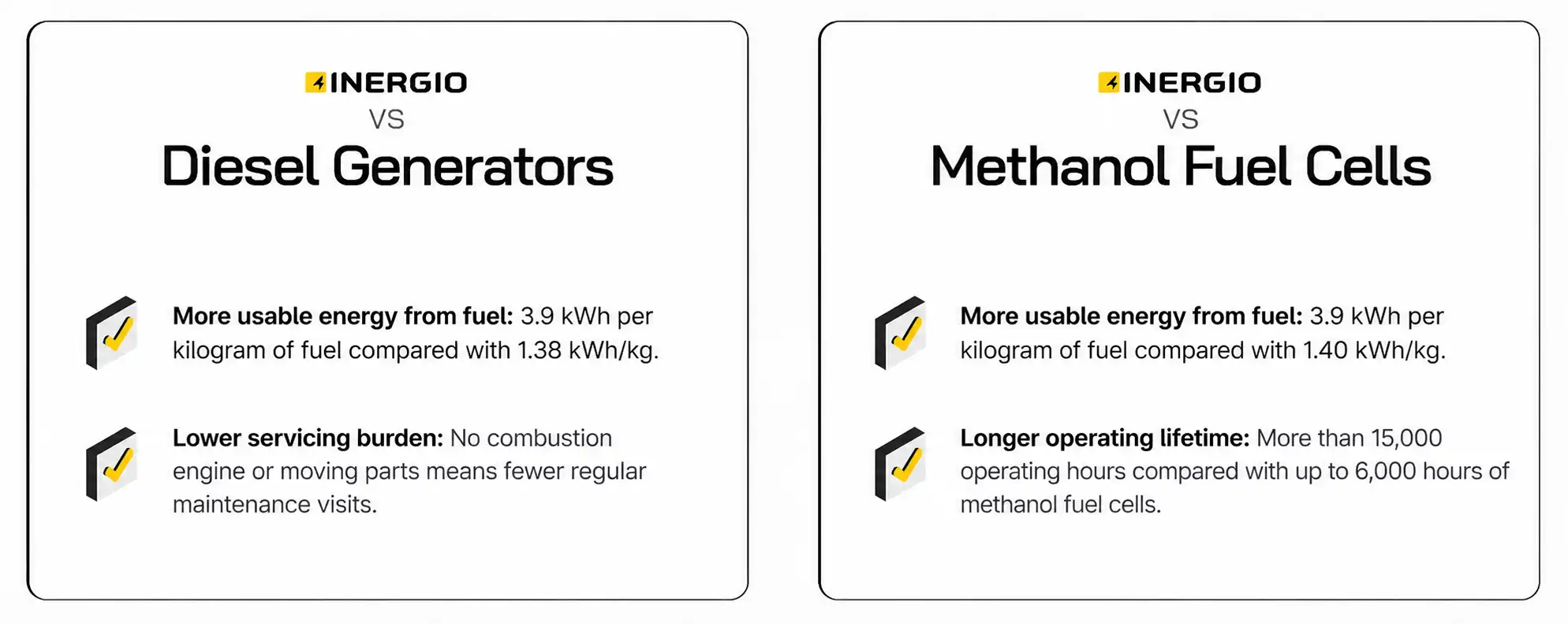
INERGIO Mini operates with standard commercial propane, a widely available fuel with high energy density. Combined with INERGIO's SOFC technology, one kilogram of propane can provide approximately 3.9 kWh of usable electricity under the reference operating conditions.
This translates into a practical advantage for remote installations: more usable electricity from every kilogram of fuel can mean less fuel to transport and store, helping extend autonomy between refueling visits.
Propane also benefits from established distribution networks, familiar storage formats, and the flexibility to adapt fuel capacity to the installation's requirements.
The difference becomes relevant when installations are remote, distributed across multiple locations, or expected to operate for extended periods between visits. A fuel cell may require little routine maintenance, but the practical value of that advantage depends partly on how easily its fuel supply can be managed.

Cold-Weather Performance: Fuel Cells in Winter Conditions
Winter presents a different set of challenges.
Solar panels produce less electricity during shorter days, while freezing temperatures can affect batteries, fuel delivery, and power-system components. A solution that performs well during summer may need a different operating strategy when temperatures remain below zero.
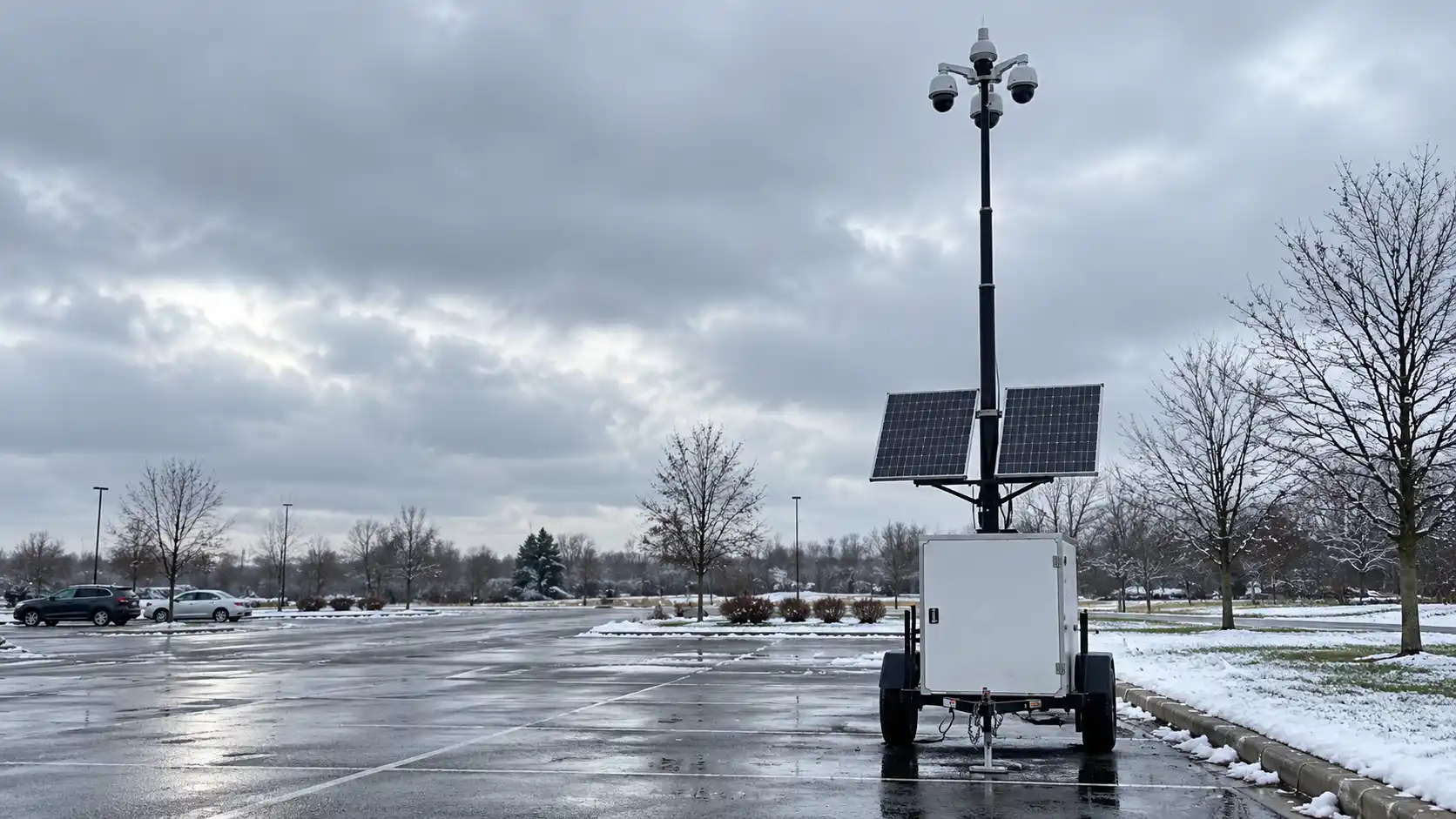
Some methanol fuel cell systems require frost-protection strategies to safeguard sensitive components or liquid-containing subsystems. Depending on their design, this can involve keeping the system operating or consuming additional energy during freezingconditions.
INERGIO Mini is designed to operate between −40°C and +55°C (-40 to 131 °F) and supports cold starts after exposure to sub-zero temperatures. It can stop when battery charging is complete and restart when needed, without requiring continuous operation solely for frost protection. For installations that need power through long northern winters, that flexibility can be particularly valuable.
Of course, the performance of the complete installation also depends on the battery, enclosure, propane supply, and other system components. Selecting a cold-weather-capable generator is one part of designing a reliable winter power system.
Fuel Cell Operating Lifetime: Why It Matters
The economics of an off-grid power system don't end with the first installation.
Components age, performance can decline, and eventually, equipment may need to be replaced. How often that happens can make a substantial difference to long-term operating costs, particularly in remote locations where every intervention requires planning and resources.
Operating lifetime is one area where fuel cell technologies can differ significantly. A reference methanol fuel cell, for example, has an expected operating lifetime of up to 6,000 hours, compared with more than 15,000 hours for INERGIO Mini. That represents more than 2.5 times the operating lifetime under the stated comparison assumptions.
These figures become particularly relevant when estimating how many equipment replacements may be needed over several years. However, operating lifetime should not be confused with calendar lifetime. In a hybrid system, a fuel cell may run intermittently, depending on energy demand, battery charge levels, and available solar power.
INERGIO Mini's automatic start-and-stop capability supports this operating approach, allowing the system to respond to changing battery-charging requirements rather than running continuously.
Fuel logistics, cold-weather performance, and operating lifetime all influence the long-term practicality of an off-grid power system. And while fuel choice is important, the way a system is designed and operated matters just as much.
CO₂ Emissions: How Do Diesel Generators and Fuel Cells Compare?
Environmental impact is another important consideration when choosing an off-grid power system. Diesel generators, methanol fuel cells, and propane-powered SOFCs differ not only in how they generate electricity, but also in the emissions associated with their operation.
A fair comparison should consider lifecycle CO₂ emissions, including equipment manufacturing, fuel production and transport, and electricity generation. Fuel consumption and conversion efficiency play a particularly important role in systems operating over long periods.
Small conventional combustion generators can exceed 1,900 g CO₂-eq/kWh of usable electricity under the conditions examined in INERGIO's lifecycle analysis. By comparison, INERGIO's propane-powered SOFC system has an estimated footprint of 737 g CO₂-eq/kWh, while the reference methanol fuel cell reaches approximately 1,342 gCO₂-eq/kWh.
The choice of fuel can further influence the results. For INERGIO's SOFC technology, using bio-propane can reduce the estimated lifecycle footprint to approximately 239 g CO₂-eq/kWh.
These figures are based on specific technologies and operating assumptions rather than universal values for every generator or fuel cell. They illustrate why conversion efficiency, fuel origin, and real operating conditions matter when comparing the environmental impact of remote power systems.
For a detailed breakdown of the methodology and lifecycle calculations, read our article Understanding CO₂ emissions in off-grid energy systems.
Off-Grid Power for Surveillance Trailers: A Practical Example
Let's consider a surveillance trailer operating continuously in a northern climate.
The installation includes cameras, communications equipment, and monitoring electronics. It has solar panels and battery storage, but needs a dependable additional power source to maintain operation when solar generation is insufficient.
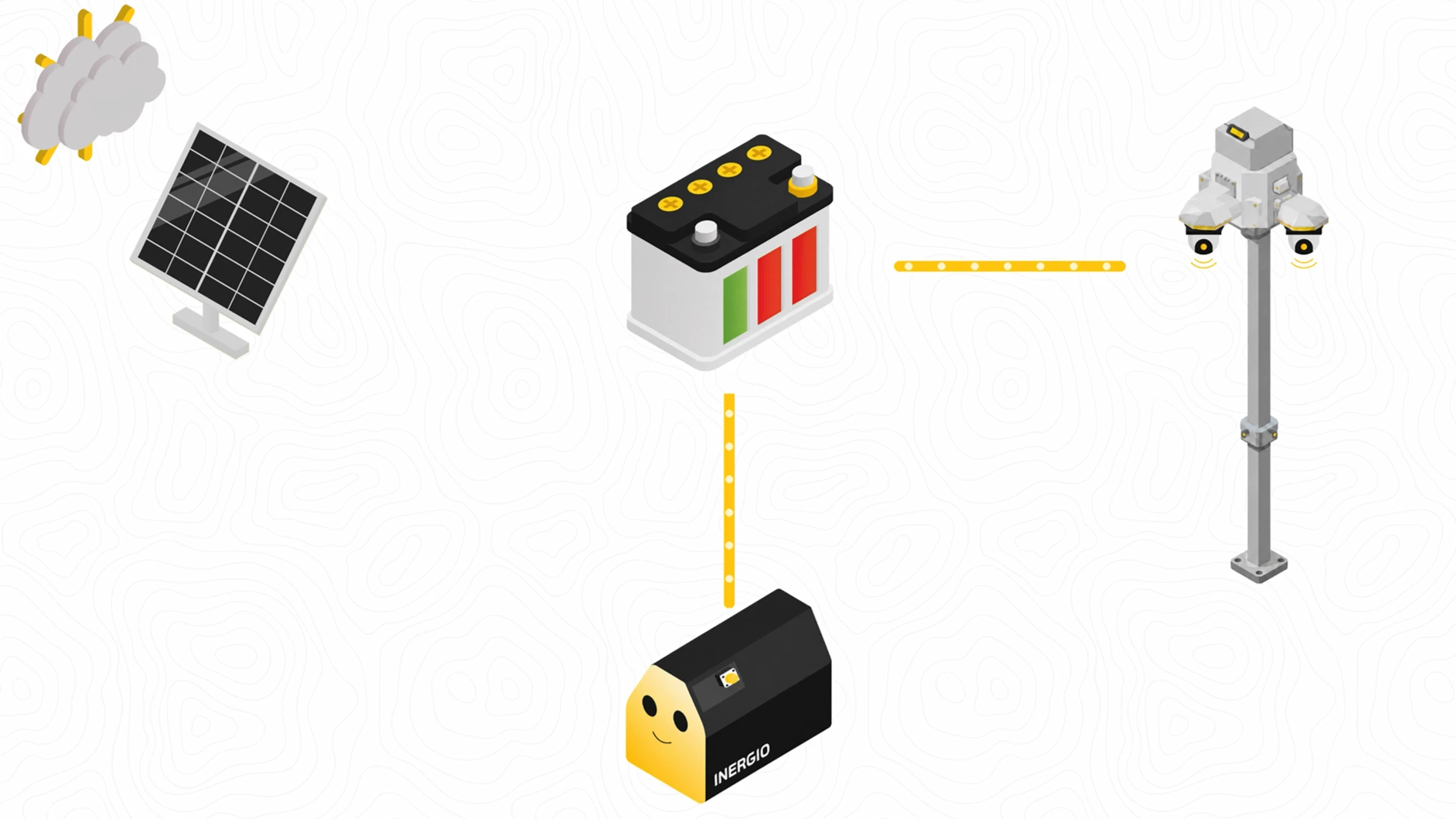
Using INERGIO's off-grid ROI calculator, we can model a surveillance trailer operating with a 95 W continuous load, supported by solar panels, battery storage, and supplementary fuel cell power.
The configuration and estimated monthly energy balance are illustrated below.
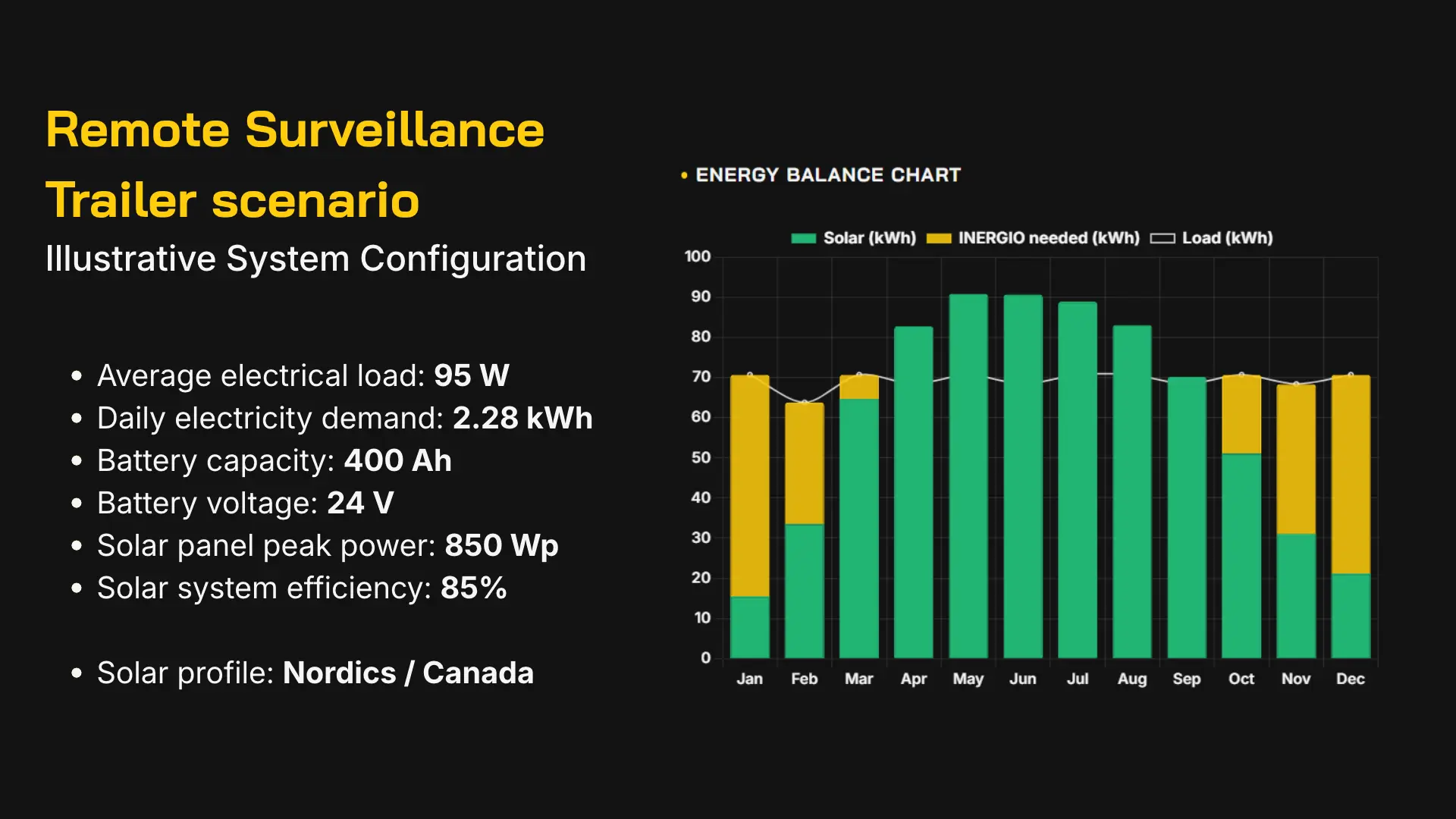
The trailer requires electricity every day, but the contribution from solar panels changes considerably throughout the year. Under the selected configuration, solar production is sufficient to cover the estimated demand from April through September.
During the colder months, shorter days and reduced solar production increase the need for supplementary electricity. INERGIO Mini provides this support when battery charging is required, helping maintain reliable operation throughout the year.
This is where a hybrid power system proves its value.
INERGIO Mini works alongside the solar panels and batteries, automatically switching on when additional energy is needed and switching off once battery charging is complete, conserving propane until it is needed again.
For remote installations, this combination brings together the advantages we've explored: autonomous operation, low maintenance requirements, commercial propane availability, and reliable cold-weather performance.
Diesel vs Fuel Cell: Comparing Total Cost of Ownership
For a remote installation, purchase price is only part of the equation.
A proper total cost of ownership (TCO) comparison considers equipment, fuel, maintenance, replacement requirements, and the cost of visiting the site. Over several years, these recurring expenses can become more significant than the initial investment.
Consider our surveillance trailer example. Using INERGIO's off-grid ROI calculator, we can estimate how the costs of three different power solutions accumulate over five years, based on the same application requirements.
The results reveal a considerable difference. Under the selected assumptions, INERGIO Mini has an estimated five-year ownership cost of approximately €10,495, compared with €31,532 for a methanol fuel cell and €59,303 for a diesel generator.
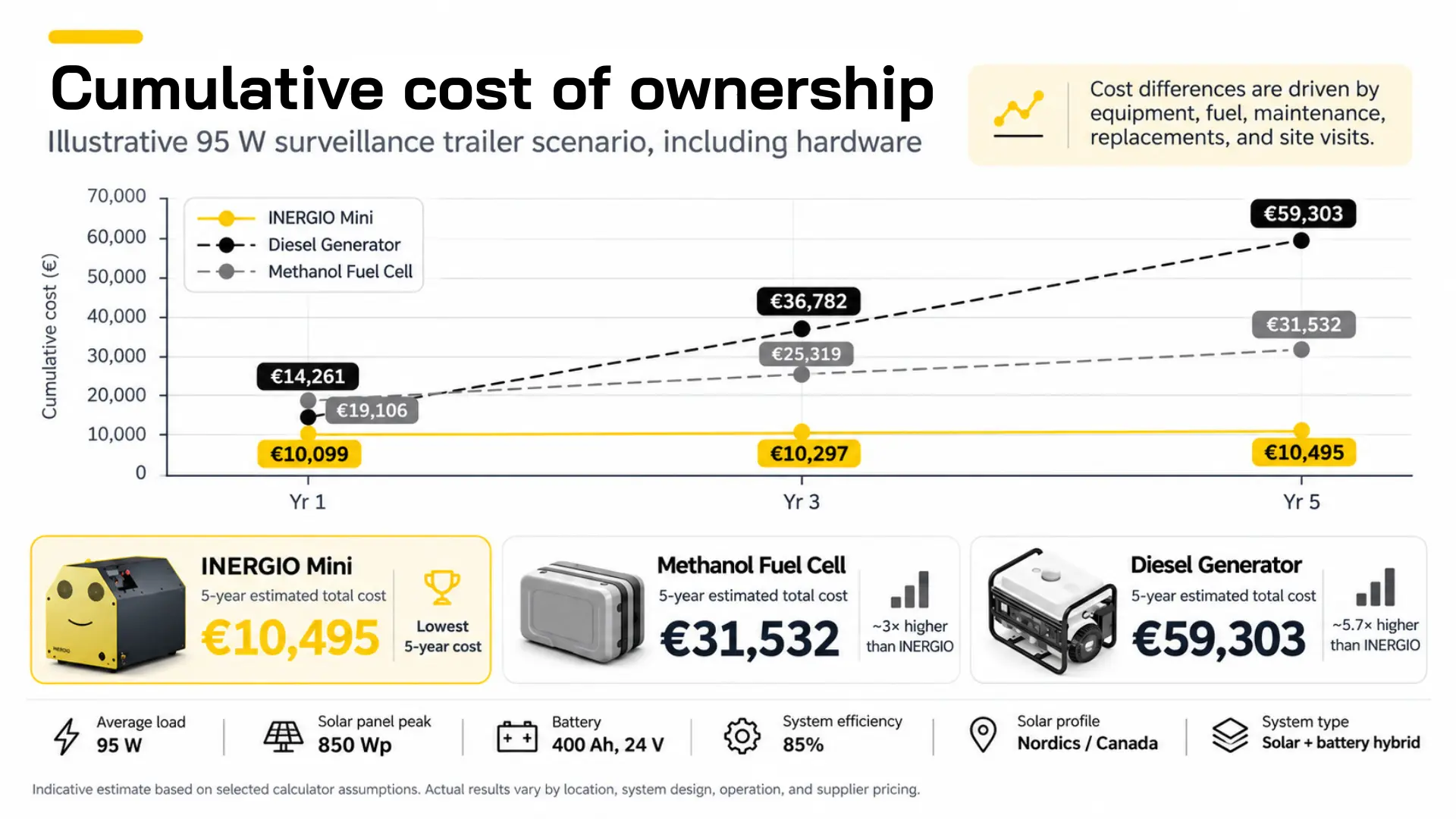
Illustrative comparison of INERGIO Mini, a diesel generator, and a methanol fuel cell for a 95W average load with an 850 Wp solar array and 24 V battery system. Includes hardware, fuel, maintenance, equipment replacement, and site intervention costs. Calculations assume €700 per technician visit and a remote propane supply connection for INERGIO. Results are indicative and depend on the selected operating conditions.
What drives these differences? Primarily,the operational requirements of each technology. Diesel generators need regular servicing and refueling, while methanol fuel cells involve cartridge replacement and shorter operating lifetimes compared with INERGIO Mini in our reference comparison. INERGIO's low-maintenance design, longer operating lifetime, and commercial propane supply help reduce these recurring expenses.
Site accessibility also plays an important role. In this scenario, each technician visit is estimated at €700, while INERGIO is assumed to have a remote propane supply connection, eliminating routine refueling visits. These conditions have a substantial influence on the comparison. The figures are illustrative, not universal. Actual costs depend on the location, fuel prices, maintenance requirements, system configuration, and operating conditions.
The takeaway is simple: the most affordable system to purchase is not necessarily the most economical to operate.
Want to see how the numbers change for yourinstallation? Explore our off-grid ROI calculator.
Which Off-Grid Power Technology Is Right for Your Application?
There is no single power technology that makes sense for every off-grid installation. The right choice depends on how much electricity the equipment requires, where it operates, and how frequently someone can access the site.
A diesel generator remains relevant for applications with substantial power demands, particularly where maintenance is straightforward and existing fuel infrastructure is readily available. However, with servicing intervals as frequent as every 100 operating hours in the conventional generator example we've examined, maintenance access deserves careful consideration.
A methanol fuel cell can be attractive for applications requiring quiet operation, especially when the necessary fuel cartridges are easily accessible and the environmental conditions suit the selected system. Operating lifetime is another consideration, with our reference methanol fuel cell rated for up to 6,000 hours.
Solar panels and batteries may be sufficient when energy demand is modest and sunlight is consistently available. In other cases, they work better alongside another power source.
INERGIO Mini is particularly well suited to applications such as surveillance trailers and traffic monitoring equipment, where continuous power requirements of around 150W, extended autonomy, and reduced site visits are key operational priorities. Its ability to generate substantial usable electricity from commercially available propane helps reduce fuel logistics requirements, while its operating temperature range of −40°C to +55°C makes it suitable for demanding weather conditions.
Difficult access, costly refueling operations, and changing energy demands can make these advantages even more valuable. Conversely, applications with very low energy demand may not justify the investment in a fuel cell system, especially when a simpler solar-battery configuration can reliably meet the load.
Ultimately, the goal isn't to choose the most advanced technology, but the one that makes the most sense for the application. Beyond supplying electricity, a well-chosen power system should minimise operational complexity, reduce unnecessary interventions, and provide dependable performance over time.
That's what makes the difference in remote operations, where the value of a power system is measured not only by what it delivers, but also by what it demands in return.