
Énergie solaire et hors réseau : Pourquoi les systèmes hybrides ne se contentent pas de batteries
Le solaire constitue une base solide pour l’alimentation hors réseau, mais une source d’appoint fiable reste essentielle lorsque l’ensoleillement est faible
Pourquoi le solaire seul ne suffit pas toujours
L'énergie solaire est désormais une source d'alimentation courante pour les applications hors réseau : remorques de surveillance, stations de surveillance environnementale, systèmes de gestion du trafic, infrastructures pétrolières et gazières, ainsi que d'autres installations isolées. Son attrait est évident : aucune logistique de ravitaillement en carburant en fonctionnement normal, aucune émission locale, aucun bruit. Lorsque la production solaire est élevée, un système de panneaux solaires et de batteries correctement dimensionné peut fonctionner de manière fiable et efficace.
Mais dans les régions où les hivers sont longs, la couverture nuageuse fréquente ou la demande énergétique continue, le solaire et les batteries seuls ne suffisent souvent pas.
Une batterie peut combler les manques nocturnes et les courtes périodes nuageuses. Lorsque le déficit dure des jours, des semaines ou des saisons entières, la batterie devient un compte à rebours. C'est là que la conception d'un système d'alimentation hybride prend toute son importance. En ajoutant une source d’énergie secondaire, telle qu’une pile à combustible conçue pour l’alimentation hors réseau, le système peut continuer à fonctionner lorsque la production solaire est inférieure à la demande.
La question n'est pas de savoir si le solaire doit être utilisé. Dans de nombreux systèmes hors réseau, il le devrait. La question est de savoir ce qui maintient le système en marche lorsque le solaire ne peut pas fournir. Cet article explique comment les systèmes solaires hybrides fonctionnent en pratique, et ce qui change lorsque INERGIO Mini fait partie du système.
Quand le solaire ne suffit pas : Le déficit énergétique saisonnier
La production solaire n'est pas constante. Elle suit le soleil, et le soleil suit les saisons.
En Europe du Nord et au Canada, la production solaire quotidienne moyenne peut chuter à environ un cinquième de son pic estival pendant les mois d'hiver. Un parc de panneaux qui couvre confortablement la demande du système en juin peut ne produire qu'une fraction de cela en décembre et janvier. Cette variation est structurelle, prévisible et critique pour la conception des systèmes hors réseau.
La production réelle est également inférieure à ce que suggèrent les chiffres nominaux des panneaux. Sur les remorques de surveillance mobiles et les stations de surveillance à distance, les panneaux peuvent accumuler de la poussière, de la saleté, de la neige ou un ombrage partiel provenant de mâts, d'arbres, de bâtiments et d'équipements à proximité. Même lorsque les panneaux sont montés à un angle d'inclinaison optimisé, les conditions sur le terrain correspondent rarement aux conditions de laboratoire.
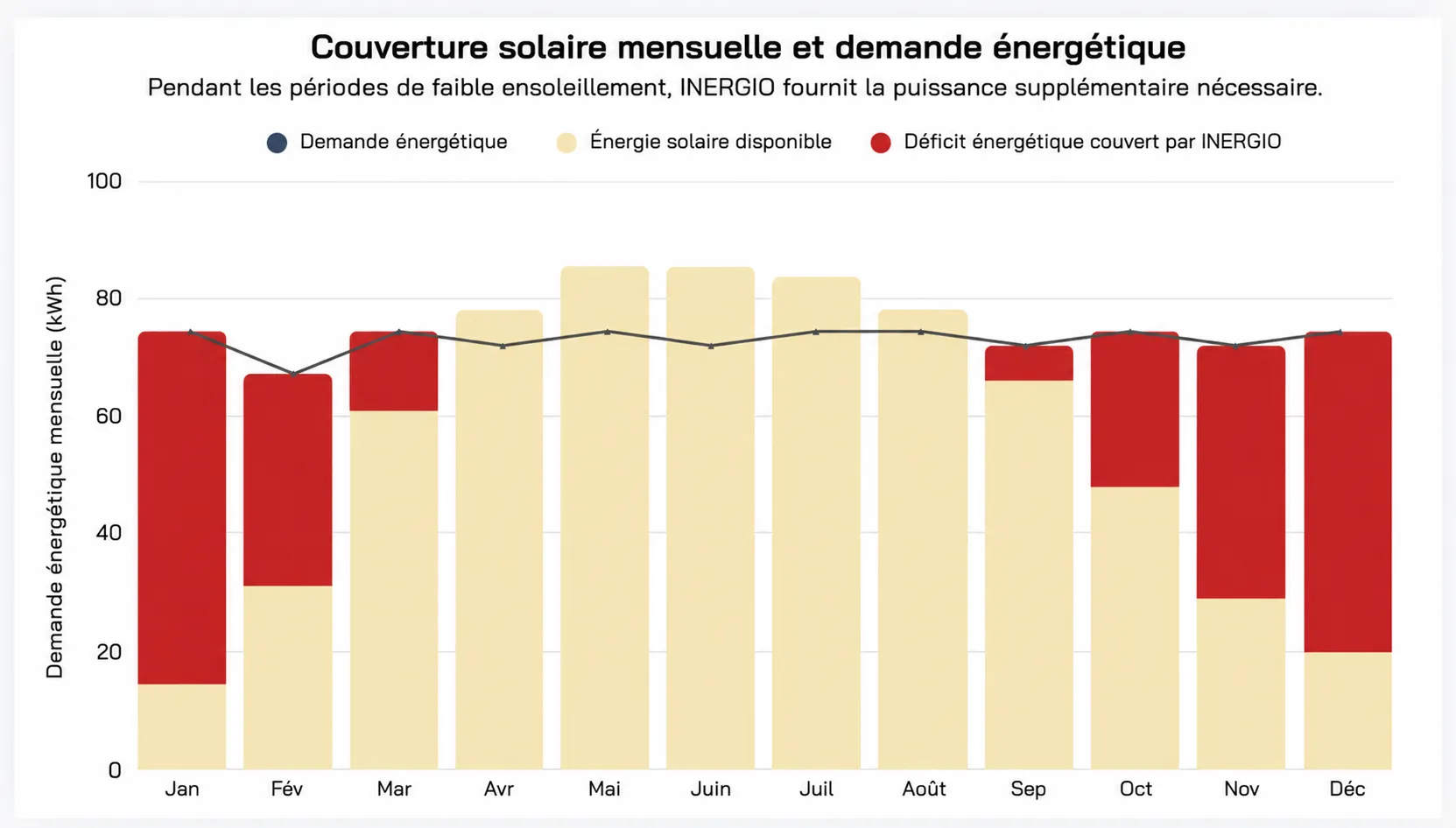
Pour un déploiement hors réseau typique alimentant des caméras, un routeur 4G et des équipements électroniques de traitement avec une consommation continue d'environ 100 W, un parc solaire de 800 Wc peut couvrir la demande totale pendant environ cinq mois de l'année dans un climat nordique. Pour les mois restants, le solaire ne peut pas supporter la charge seul.
Une batterie de 400 Ah à 12 V, utilisée à 80 % de sa capacité, stocke environ 3,8 kWh. C'est suffisant pour faire fonctionner un système de 100 W pendant environ 38 heures sans apport solaire. Elle assure le fonctionnement nocturne et les courtes périodes de mauvais temps. Elle ne couvre pas les périodes prolongées de faible ensoleillement en hiver.
Le solaire plus la batterie constitue une base solide. Sans une source d'énergie secondaire fiable, il peut rester un système incomplet pour un fonctionnement hors réseau continu.
Comment INERGIO complète un système solaire hybride
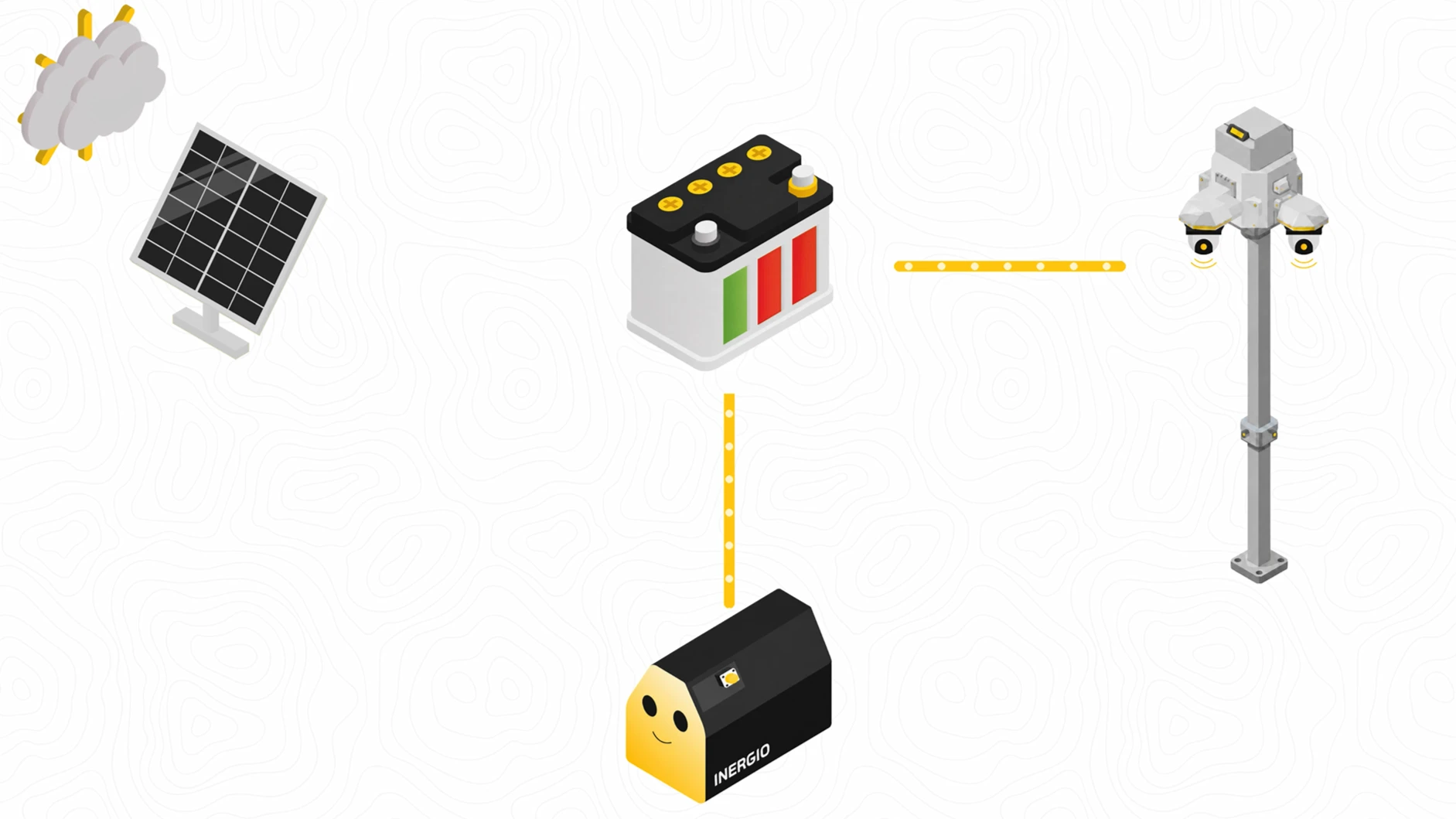
INERGIO Mini est un générateur à pile à combustible à oxyde solide fonctionnant au propane commercial standard. Dans un système hybride hors réseau, il ne remplace pas le solaire, il le soutient.
Le système est alimenté par batterie. INERGIO surveille la tension de la batterie en continu. Lorsque la tension descend en dessous d'un seuil configuré, INERGIO démarre automatiquement, charge la batterie et s'éteint une fois que la batterie atteint 100 % de son état de charge.
INERGIO ne reste pas inactif et produit de l'énergie lorsque la batterie en a besoin.
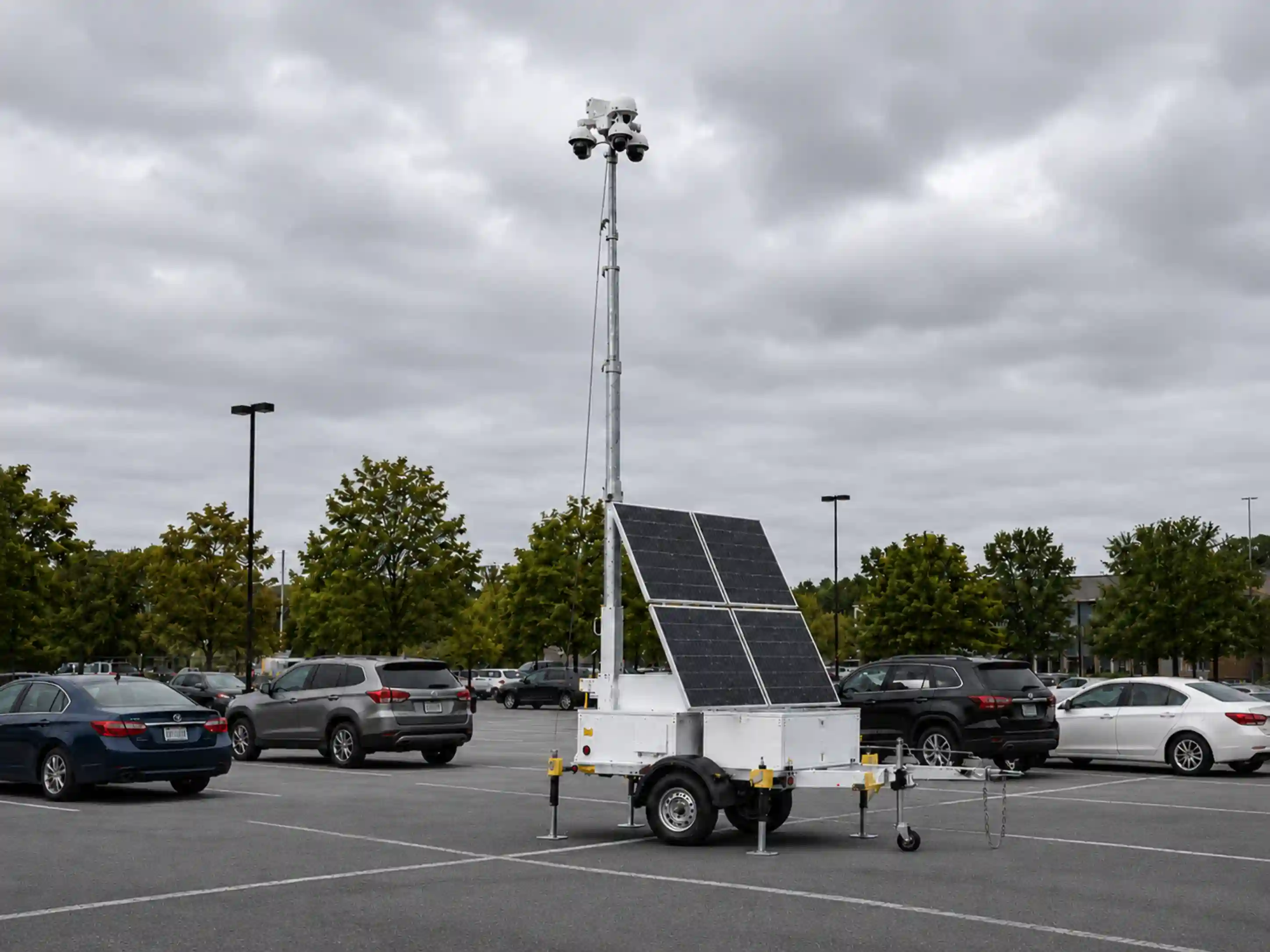
Lorsque la production solaire est suffisante, l'INERGIO Mini reste éteint. Lors des journées nuageuses, en hiver ou en cas de faible ensoleillement, le système s’active lorsque la batterie a besoin d’un apport d’énergie. Si l’énergie solaire continue de contribuer à l’alimentation, la pile à combustible peut fonctionner pendant un cycle plus court, car les deux sources rechargent la batterie simultanément.
Il en résulte une logique de fonctionnement simple : l’énergie solaire fournit la première source d’énergie, la batterie stabilise le système et l’INERGIO Mini comble le déficit restant lorsque la production solaire est insuffisante.
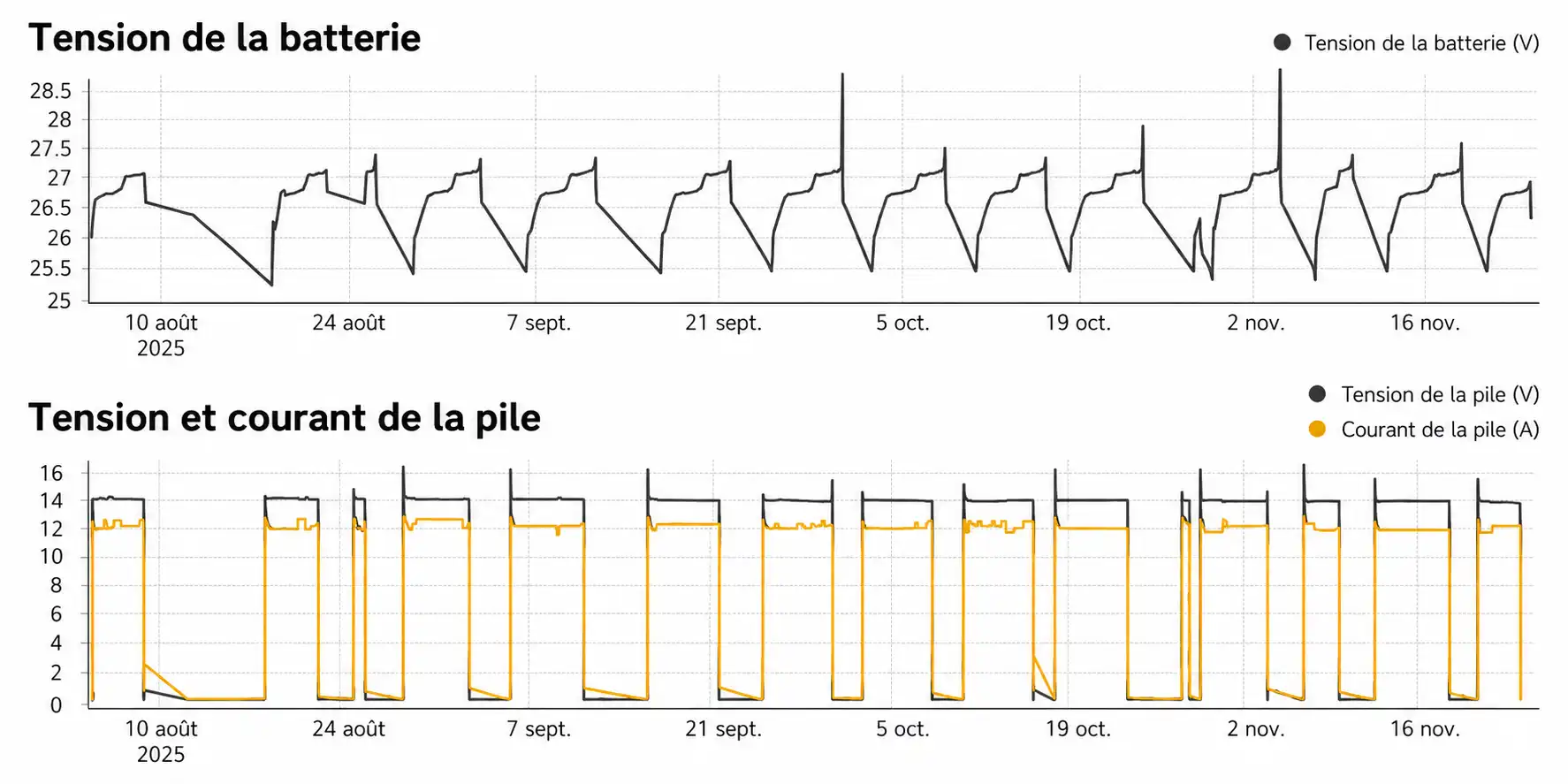
Des bancs de batteries plus grands peuvent améliorer davantage le comportement du système. Avec un tampon plus important, INERGIO s'active moins fréquemment et fonctionne sur des cycles plus longs. Cela réduit les cycles inutiles et favorise une longue durée de vie de la pile.
Dans un déploiement hybride typique dans le nord des États-Unis avec une charge de 100 W et 800 Wc de solaire, le système peut fonctionner uniquement à l'énergie solaire d'environ avril à août. INERGIO couvre les périodes restantes de faible ensoleillement, consommant environ 20 kg de propane par an. Cela signifie que le remplacement du carburant peut être planifié à l'avance au lieu d'être déclenché par des visites d'urgence sur site.
Pour calculer cela pour un déploiement spécifique, utilisez le calculateur de puissance hors réseau INERGIO (en anglais). Saisissez votre charge, la capacité de votre batterie, votre configuration solaire, les données de localisation et les hypothèses de carburant pour estimer le déficit énergétique et comparer les options de secours en fonction de vos propres conditions de fonctionnement.
Cette prévisibilité est particulièrement importante dans les climats nordiques, où les systèmes de secours sont souvent soumis à leur plus forte contrainte. INERGIO fonctionne à moins de 50 dB à un mètre et peut fonctionner jusqu'à -40°C (-40°F) sans chauffage auxiliaire, ce qui le rend adapté aux déploiements silencieux, froids et éloignés.
Alimentation autonome pour les applications où le solaire ne peut pas être utilisé
Tous les déploiements hors réseau n'ont pas un déficit solaire à résoudre. Certaines applications ne peuvent pas du tout accueillir de panneaux solaires.
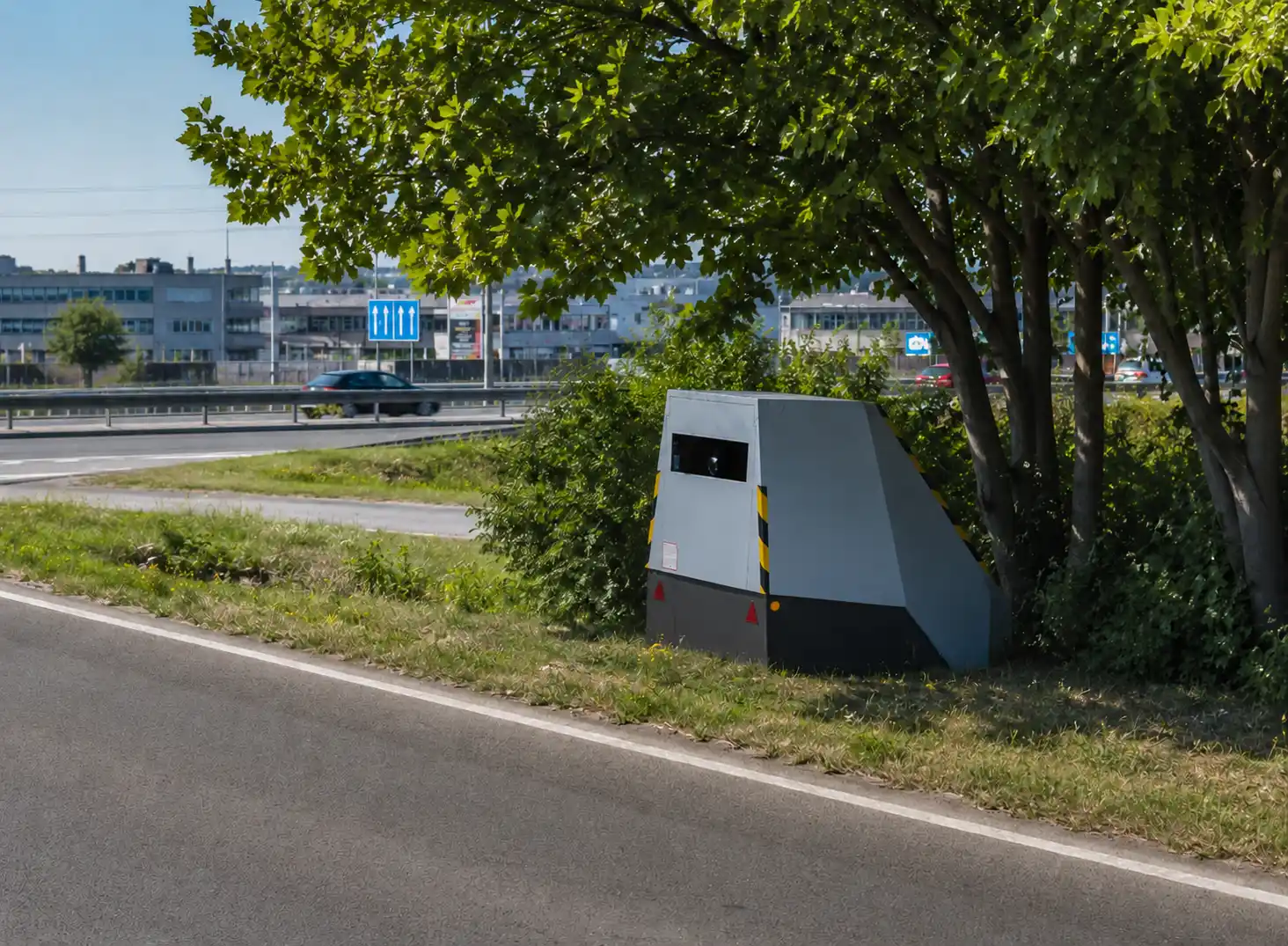
Une armoire de contrôle de vitesse routier est positionnée pour couverture du trafic, et non l'accès solaire. Il peut être installé sur un accotement étroit, sous le couvert des arbres, orienté à l'opposé du soleil, ou dans un endroit où les panneaux ne sont pas autorisés. Une station de surveillance environnementale peut fonctionner dans un canyon urbain, une forêt dense ou une zone industrielle ombragée. Un déploiement temporaire sur un chantier de construction peut devoir être opérationnel en quelques heures, sans le temps ni l'espace nécessaires à la planification d'un système solaire.
Dans ces cas, INERGIO n'est pas la solution de secours. C'est la source d'énergie principale, la batterie servant de tampon pour la stabilité de la charge et le démarrage du système.
Les équipements mobiles de contrôle de vitesse en sont un exemple pratique. Ces systèmes compacts et autonomes sont déployés en bord de route pendant des semaines ou des mois, dans des endroits choisis uniquement pour leurs performances de surveillance. INERGIO Mini fonctionnant au propane fournit une alimentation ininterrompue, quelle que soit l'orientation du site, la saison ou les conditions météorologiques.
Le propane simplifie également la logistique sur le terrain. Il est largement disponible via les canaux d'approvisionnement commerciaux standard et ne dépend pas de cartouches propriétaires ou de logistiques de carburant spécifiques au fabricant. Pour les opérateurs gérant des actifs distribués, cela rend le ravitaillement plus facile à planifier, plus facile à approvisionner et plus facile à adapter.
Comment INERGIO surpasse les alternatives au diesel et au méthanol
Pour les systèmes hybrides hors réseau, la source d'énergie secondaire détermine si le système reste opérationnel lorsque l'énergie solaire ne peut pas fournir.
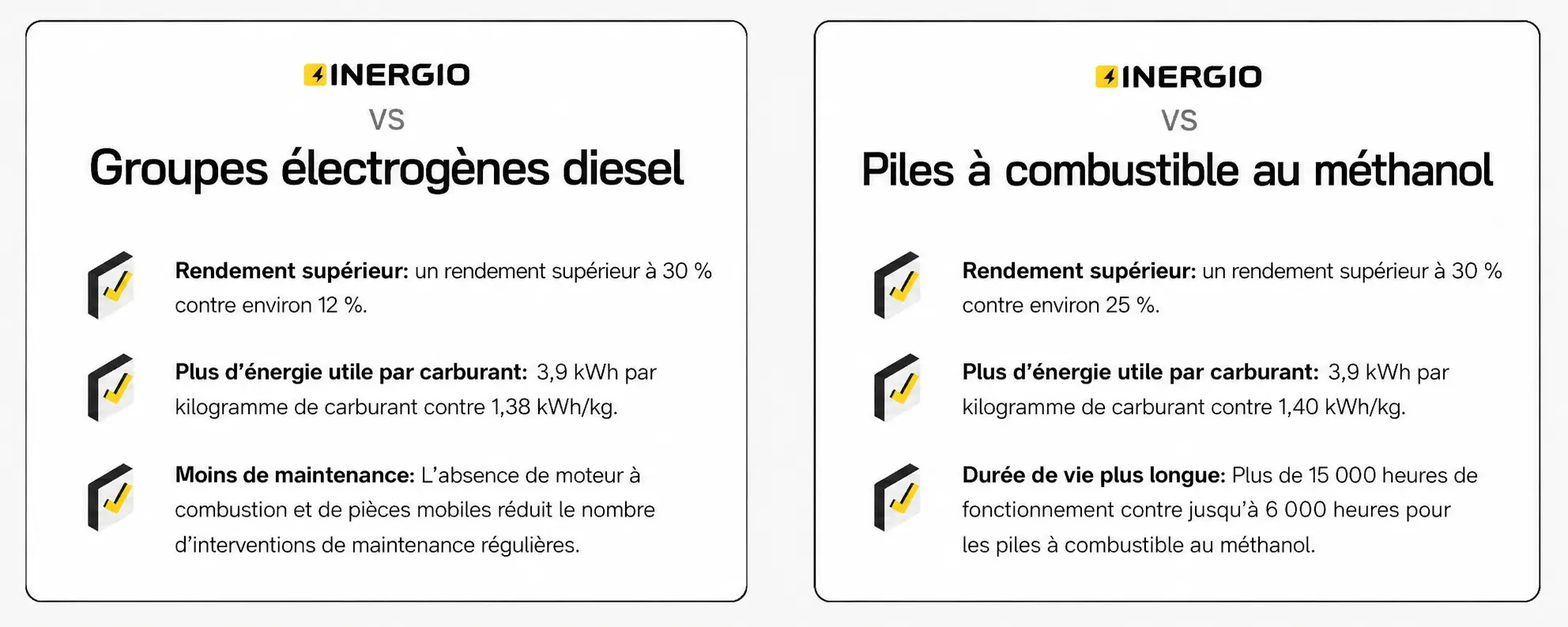
Les générateurs diesel ont été le choix traditionnel pendant des décennies. Ils fonctionnent, mais ils sont mal adaptés aux faibles charges continues. À titre de comparaison, un petit générateur diesel fonctionne avec un rendement d’environ 12 %, tandis qu’INERGIO atteint un rendement supérieur à 30 %. INERGIO produit également 3,9 kWh par kilogramme de carburant (1,8 kWh/lb), contre 1,38 kWh/kg pour le diesel. Pour les systèmes hors réseau fonctionnant en continu, cela se traduit par une énergie utilisable plus importante à partir du carburant acheminé sur site, moins de trajets pour le ravitaillement et moins de gaspillage opérationnel.
La charge de maintenance est tout aussi importante. Un générateur diesel nécessite généralement un entretien toutes les 100 heures de fonctionnement. Pour un système de surveillance moyen consommant 483 kWh par an, cela peut signifier au moins 10 interventions de maintenance par an. INERGIO n'a pas de moteur à combustion ni de pièces mobiles, ce qui réduit la charge d'entretien régulier associée au diesel. Il fonctionne également à moins de 50 dB à un mètre, ce qui le rend mieux adapté aux déploiements urbains, à proximité des zones résidentielles et sensibles au bruit.
Les piles à combustible au méthanol sont une alternative plus proche, mais l'écart de performance reste significatif. Dans le cas de comparaison, une pile à combustible au méthanol fonctionne à 25 % d'efficacité et produit 1,40 kWh par kilogramme de carburant. INERGIO fonctionne avec un rendement supérieur à 30 % et produit, comme indiqué précédemment, 3,9 kWh par kilogramme de carburant. Pour les installations isolées qui nécessitent une alimentation électrique continue sur de longues périodes, cela se traduit par une plus grande autonomie grâce au carburant acheminé sur site et par une réduction du nombre de ravitaillements.
La performance par temps froid est également importante. Les piles à combustible au méthanol peuvent nécessiter une protection contre le gel à basse température, ce qui ajoute de la complexité et un autre point de défaillance potentiel. INERGIO fonctionne de -40°C à +55°C sans nécessiter de système de chauffage supplémentaire, ce qui le rend adapté aux régions nordiques, aux déploiements hivernaux et aux conditions de terrain difficiles.
Enfin, la longévité influe sur la fiabilité à long terme. INERGIO est conçu pour fonctionner plus de 15 000 heures de fonctionnement, contre jusqu'à 6 000 heures pour la pile à combustible au méthanol de la comparaison.
Le solaire et les batteries seuls peuvent être très efficaces lorsque la production solaire est suffisante. Mais dans les régions connaissant de longues périodes de faible ensoleillement, ils peuvent être insuffisants pour les charges continues. Les données de tension de la batterie montrent à quoi ressemble un système hybride complet en pratique : le système reste en ligne malgré chaque manque d'ensoleillement, car INERGIO comble le déficit en cas de besoin.
Conçu pour un fonctionnement hors réseau ininterrompu
Le fonctionnement continu dans des conditions exigeantes n'est pas une fonctionnalité supplémentaire d'un système hors réseau. C'est une exigence.
INERGIO est conçu pour les déploiements où le solaire est précieux mais insuffisant, où le diesel génère une charge opérationnelle trop lourde, et où les temps d'arrêt entraînent des coûts réels.
Dans un système solaire hybride, INERGIO comble le déficit énergétique saisonnier. Dans les applications où le solaire ne peut pas être utilisé, il devient la source d'énergie principale. Dans les deux cas, le résultat est le même : le système reste opérationnel.