
Reliable decentralized energy: INERGIO’s technology at the core of the Micro Bio CHP project
How INERGIO's 2.5 kW solid oxide fuel cell enables resilient, low-emission and integrated energy systems for buildings
The role of reliable power in decentralized energy systems
Energy systems are becoming more decentralized. Buildings, infrastructure and industrial sites increasingly combine local power generation with renewable energy sources such as solar, storage and renewable fuels. Solar panels, energy storage and renewable fuels are increasingly integrated into these systems. But one challenge remains constant. Reliable power.
Solar generation depends on weather conditions and batteries provide limited duration. For buildings and critical infrastructure that must operate continuously, a stable source of electricity generation is essential. As energy systems decentralize, energy resilience is becoming a key requirement. Buildings, infrastructure and industrial operations must be able to maintain reliable power supply even when renewable generation fluctuates. Fuel cells are increasingly integrated into hybrid energy systems because they provide continuous power with high efficiency and low emissions.
The Micro Bio CHP Project is a European research initiative exploring how hybrid energy systems can supply multi-family buildings with minimal reliance on external energy sources. The project is funded under the EU Horizon Europe programme and brings together leading organizations including BIOS Bioenergiesysteme, Fraunhofer IKTS, Catator, Hysytech, Wuppertal Institute, and INERGIO. At the center of the system is a compact 2.5 kW solid oxide fuel cell system developed by INERGIO.
A hybrid system designed for resilient and low-emission buildings
The goal of the Micro Bio CHP project is to develop a highly efficient renewable energy system capable of supplying heat and electricity to multi-family buildings while reducing reliance on external energy sources.
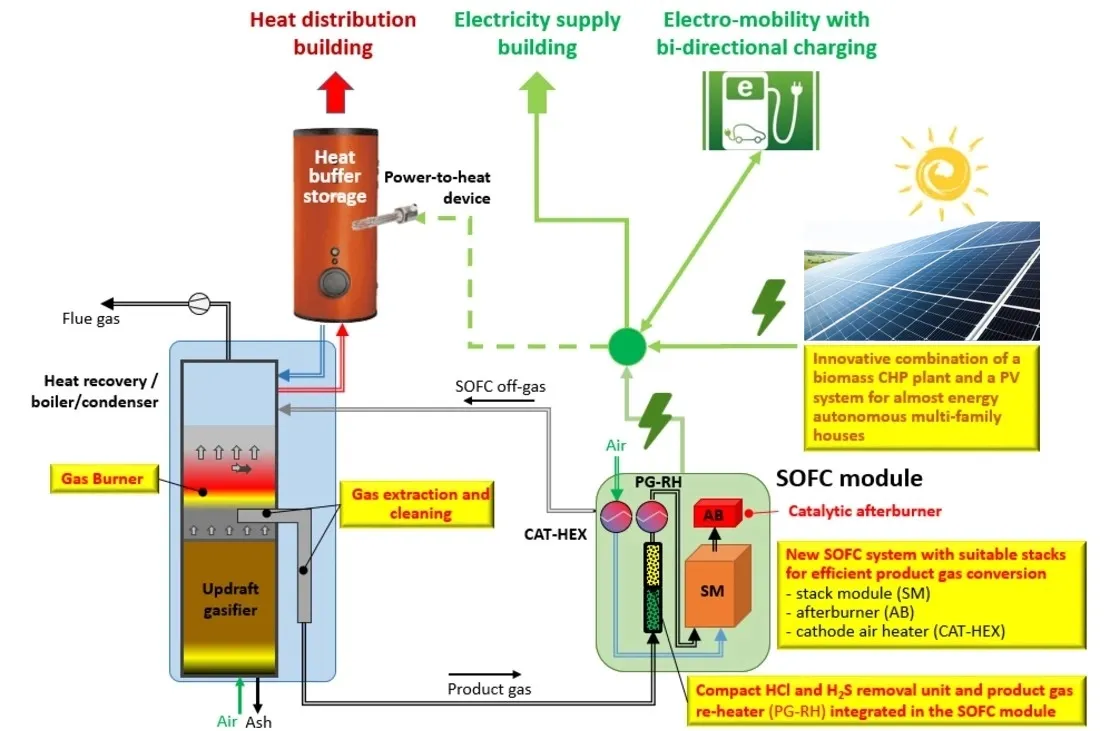
The architecture integrates several complementary technologies.
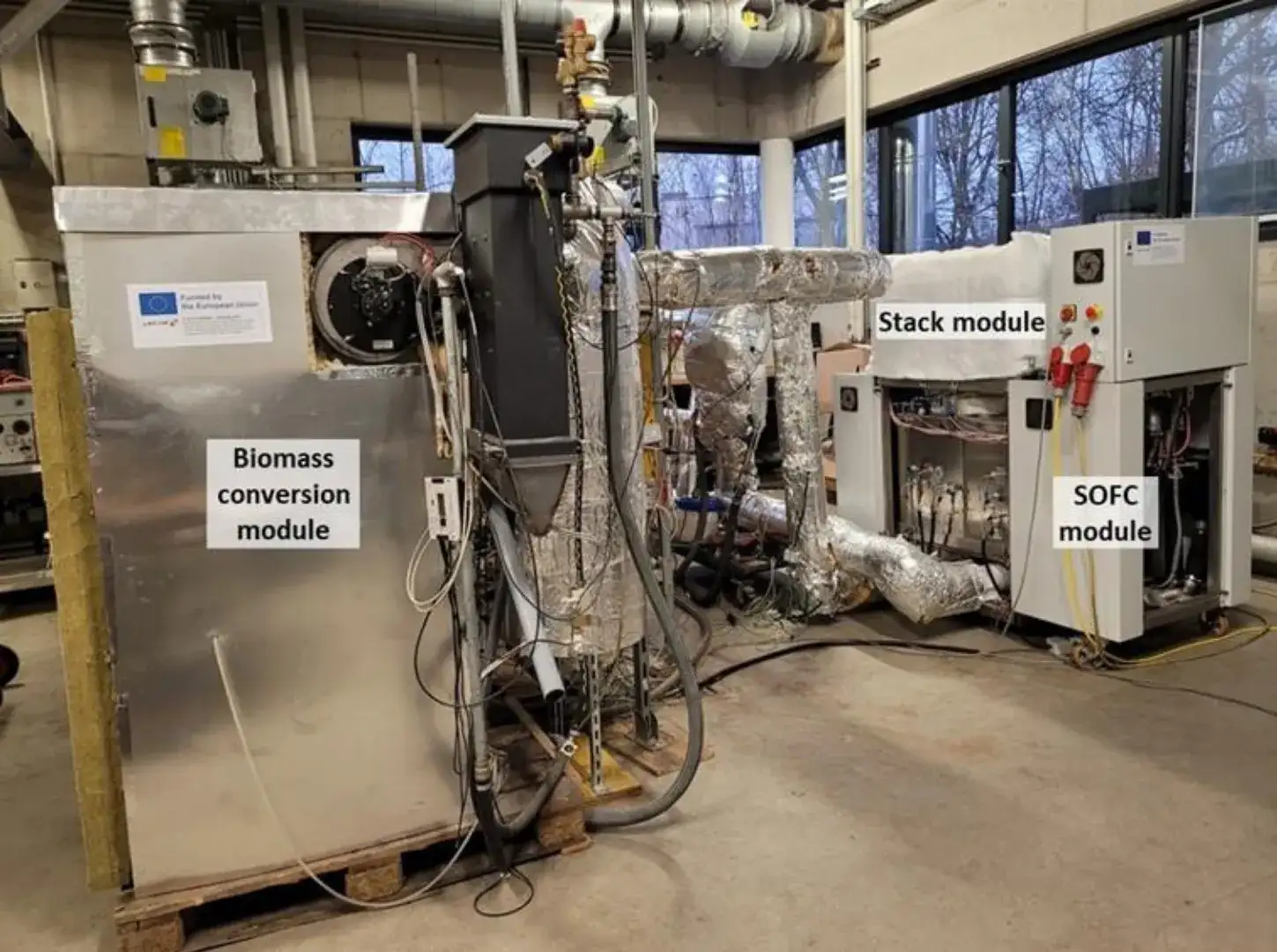
A biomass conversion module based on a fixed-bed updraft gasifier converts wood pellets into a fuel gas. This gasifier operates with a fuel power input of 19 kW and can produce up to 15 kW of heat. Part of the product gas is used for heat production while another portion is directed to the fuel cell for electricity generation.
Additional system components include:
• A novel gas cleaning system
• Photovoltaic generation
• Electricity storage and heat buffer storage
The system has been installed and fully operational since October 2024 at BIOS Bioenergiesysteme in Graz, Austria. By combining renewable biomass with solar energy and high-efficiency fuel cell power generation, the system contributes to the decarbonization of building energy supply while maintaining reliable operation.
INERGIO’s solid oxide fuel cell system at the core of the system
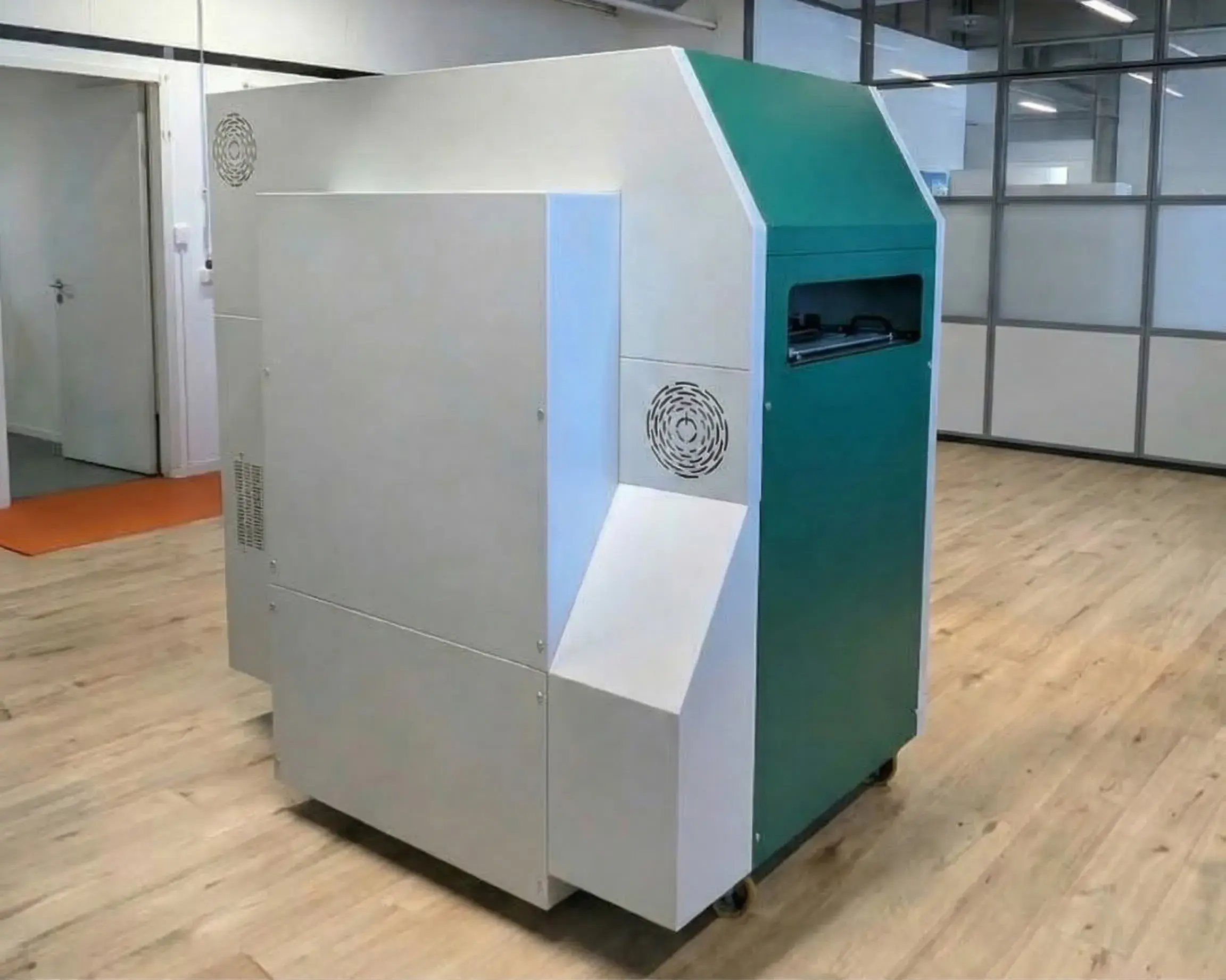
At the center of this architecture sits the INERGIO solid oxide fuel cell system, with a 2.5 kW stack module developed by Fraunhofer IKTS.
The system delivers 2.5 kW of electrical power at full-load operation with an electrical efficiency of 44%. The SOFC converts the cleaned biomass-derived gas directly into electricity through an electrochemical process rather than combustion.
This process offers several advantages.
• High electrical efficiency
• Continuous electricity generation
• Very low emissions
• Minimal mechanical wear
The heat produced during operation is recovered and used within the building heating system. When combined with the biomass conversion module, the system achieves overall efficiencies close to 90%.
For hybrid energy systems, this type of performance is critical. Solar generation and energy storage help manage variability. The fuel cell provides the stable power generation layer that ensures reliable system operation.
Designed for efficiency, compactness and low emissions
The SOFC module developed within the project integrates several innovations.
• The system includes integrated HCl and H₂S removal reactors, enabling efficient operation with biomass-derived gas.
• The stack technology has been optimized for operation with gas from biomass gasification, ensuring reliable performance under real operating conditions.
• The system also achieves almost zero harmful gaseous and dust emissions, making it suitable for deployment in urban building environments.
These characteristics make the system particularly relevant for decentralized energy solutions where both environmental performance and operational reliability are required.
System integration: combining complementary energy technologies
The Micro Bio CHP project highlights the importance of system integration in modern energy architectures.
Rather than relying on a single energy source, the system combines technologies that complement each other.
• Solar PV contributes renewable electricity during periods of sunlight and can cover most electricity demand during summer.
• The biomass CHP system supplies heat and electricity during winter and transition seasons.
• Energy storage and heat buffers help balance fluctuations in demand.
Within this architecture, the fuel cell provides the continuous electricity generation layer that allows the entire hybrid system to operate reliably.
From research to real-world energy systems
The Micro Bio CHP system demonstrates how renewable fuels, solar energy and fuel cells can work together to create resilient decentralized energy systems. The project has reached Technology Readiness Level 5, demonstrating the feasibility of the system under realistic operating conditions.
For INERGIO, projects like Micro Bio CHP demonstrate how compact fuel cell systems can serve as reliable power generation units within hybrid energy architectures. The same characteristics that make fuel cells valuable for building energy systems also apply to other decentralized applications such as telecom infrastructure, remote monitoring systems and off-grid industrial operations.
Reliable and low-emission power generation remains essential for these environments. Fuel cell technology offers a pathway to deliver energy resilience, decarbonization and efficient system integration within the next generation of decentralized energy systems.
Read more at the official website of the project: https://microbiochp-project.eu/project.